
The Solid-State Battery That Wasn’t
The solid-state battery that wasn't, tracking objects in orbit, and inside an airport body scanner.


Topics worth your time this issue: an independent audit of Donut Lab's solid-state battery claims, tracking new objects launched into orbit in 2025, the signal-processing architecture inside airport body scanners, and a recent battery-stove startup feud.

Interesting Video: Battery Claims Meet Test Data
One of the recurring challenges in the battery space is that many investors and even industry observers struggle to distinguish between a promising laboratory result, a prototype, and a scalable commercial product. The gap between those three stages is enormous. Independent technical diligence and validation are critical, especially when extraordinary performance claims are involved.
Donut Lab is facing more criticism after an investigation by science YouTuber Ziroth uncovered several new examples of miscommunication and misleading technical results. For those unaware, Donut Lab set off a frenzy at CES 2026 by claiming a battery that was beyond state of the art across every single battery metric: cost, longevity, energy density, and charging speed. However, subsequent testing was not able to reproduce any of the features, and indicates the battery cell doesn’t use a solid-state sodium chemistry as claimed, but a lithium-ion one.
The battery test data points to a different cell chemistry not through a teardown of the cell itself, but through two battery characterization curves: voltage versus state of charge and cell expansion during charging.
The first breadcrumb is the voltage curve which closely resembles a high nickel lithium-ion cell, sitting in the same 3.7–3.8 V range where NCM type cells operate. The stronger clue is the expansion curve: during charge, it showed the characteristic graphite-anode kink around 50–70% state of charge, a behavior sodium-ion cells should not show because sodium ions are too large to naturally nest inside graphite the way lithium ions do.
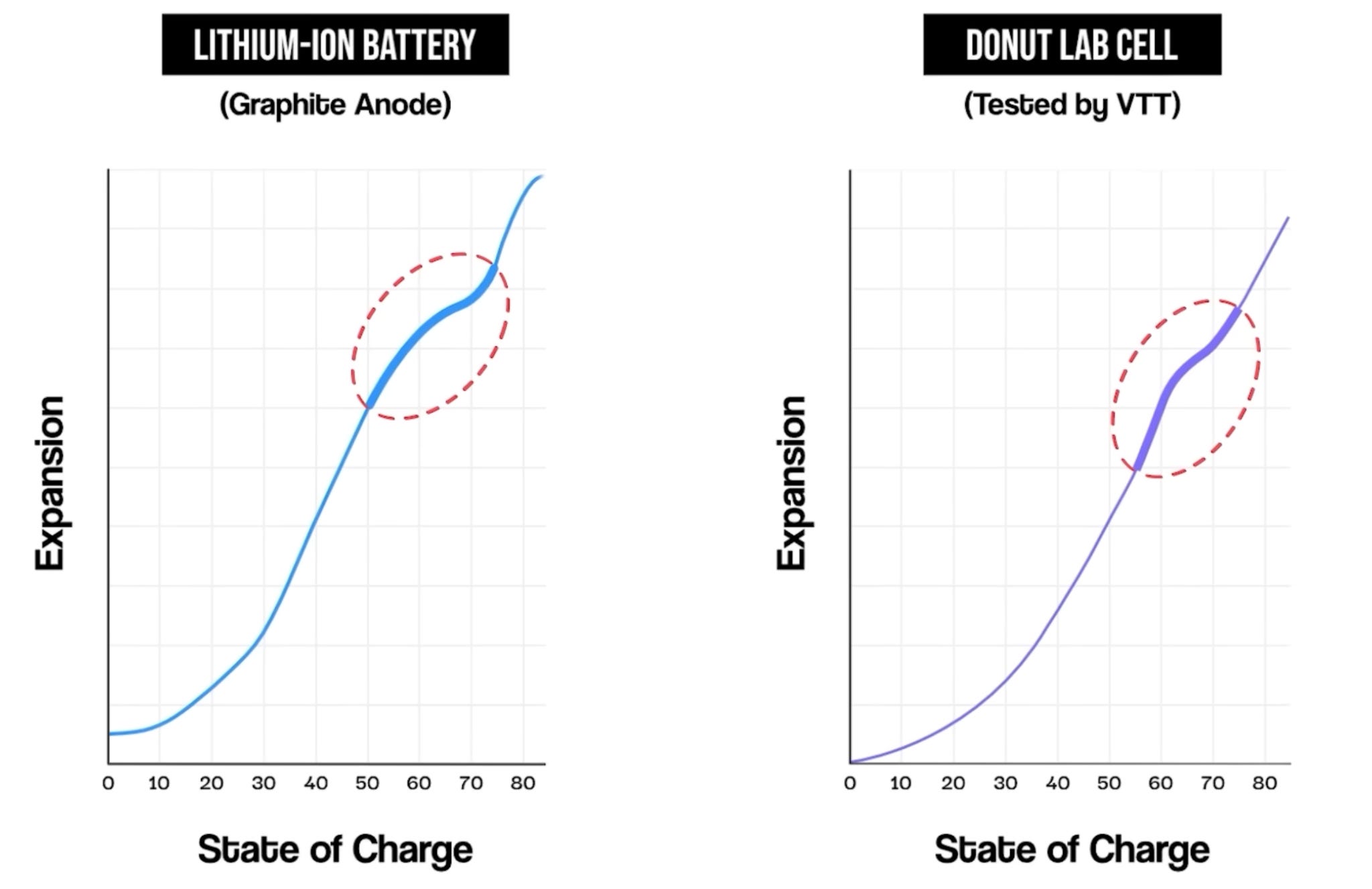
If Donut Lab simply claimed a highly performant lithium-ion battery (which they appear to have) for use with partner companies like Verge Motorcycles, the reaction would have been far more measured. Instead, it appears to have fallen into a familiar trap: early technical claims stretch into a company-defining narrative before the underlying evidence can support it.
Extraordinary claims still require ordinary validation.
Interesting Chart: More Objects in Orbit
A record number of objects were launched into space in 2025, mostly small satellites being stacked into commercial constellations.

Presented by Jiga: Manufacturing ≠ Transactions
Source custom parts with direct access to the manufacturers making them. No middleman, no black box. Jiga gives you a vetted network and one accountable partner standing behind every order. You know who's building your parts and communicate with them directly. AI-assisted operations handle supplier matching, quoting, quality verification, and production tracking, so the relationships stay human while the operations run at speed.

Interesting Whitepaper: Edge Processing in mmWave Scanners
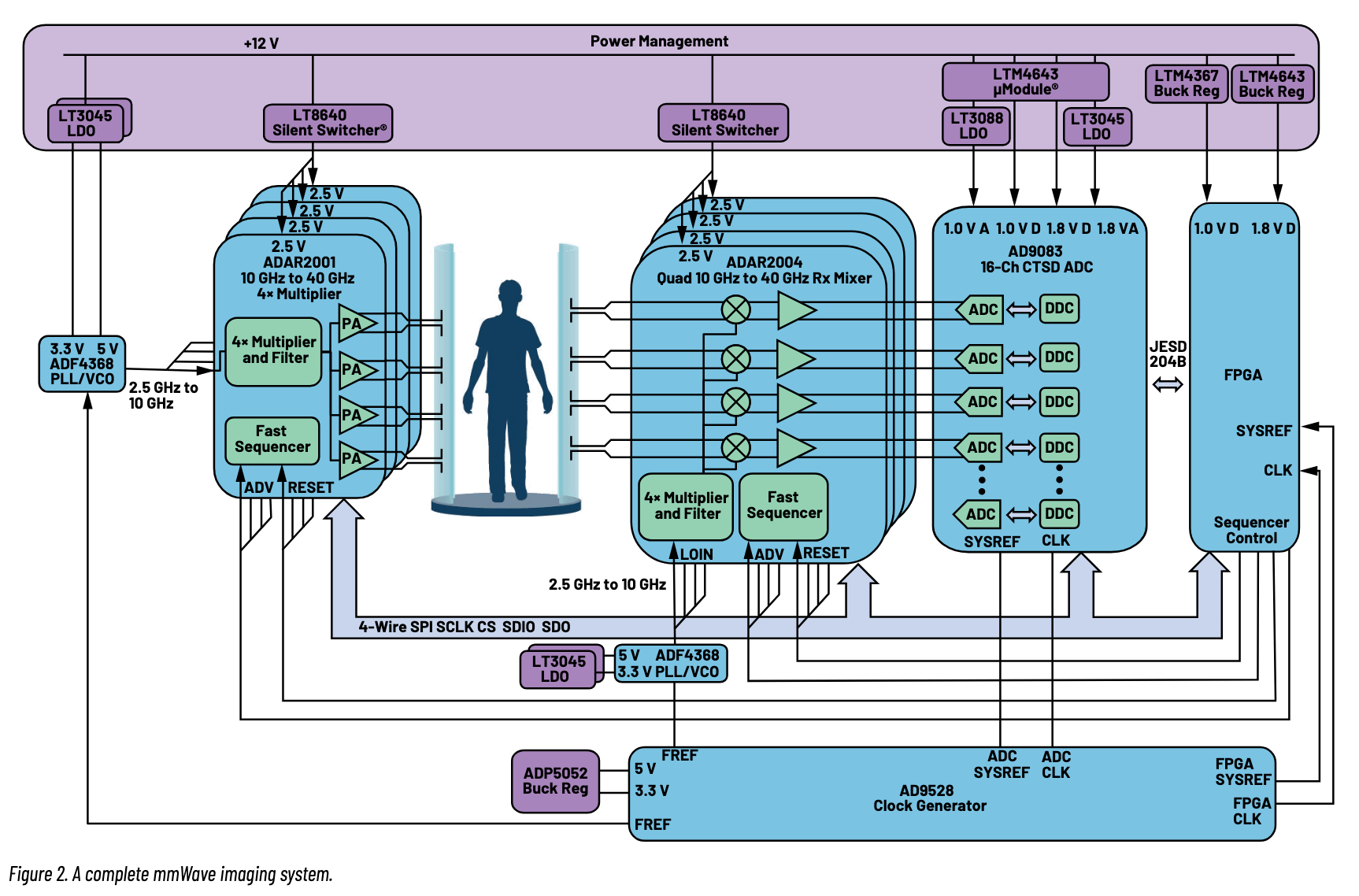
A fun artifact from Analog Devices: a vendor whitepaper that walks through the architecture of a modern airport mmWave scanner. Phased-array transmitters and receivers, high channel count ADC capture, and an edge-processing chipset that keeps the main processor from having to manage every part of the scan.
Manufacturing & Startup News
Copper and Impulse Labs are now in court over battery-integrated induction stoves, turning a nascent appliance category into an IP and safety certification fight.
Bear Robotics is acquiring Kinisi Robotics, a Bristol startup developing a wheeled humanoid, to move beyond robots that navigate buildings and into robots that can pick, place, and sort objects.
Sophia Space raised a $7M SAFE, bringing total funding to $22M, to build orbital compute hardware for satellites.
Upscale AI raised a $190M Series A extension to build networking chips for AI data centers, focused on getting GPUs from different vendors to communicate fast enough for large AI workloads.
Tools From Our Partners
Jiga – Custom parts at digital speed, with trusted shop access.
SolidWorks for Startups – Full access to SolidWorks’ product development tools, free for early-stage startups.
Zoo – AI-native CAD for generating fully editable B-rep models from natural language or direct manipulation.
Access Every Link We’ve Ever Shared 🎞️
Refer three friends to Hardware FYI and unlock our full archive.
Missed an issue? Hunting for that one link? Every tool, guide, and article we’ve ever shared is in here.
P.S. If you find something interesting—an article, tool, funding round, project, really anything—send it our way!
P.P.S. 20,000+ engineers, founders, and operators read this newsletter. If you want to reach them, get in touch.