
Glue is All You Need
Repairing Cybertrucks with glue, zero-ohm resistors, and board-level archives of every video game console


Topics worth your time this issue: how Cybertrucks treat gigacasting repair as sectional parts, zero-ohm resistors as anti-reverse engineering decoys, a board-level archive of nearly every video game console ever made, and an updated 2026 map of SoCal’s aerospace corridor.

Interesting Links
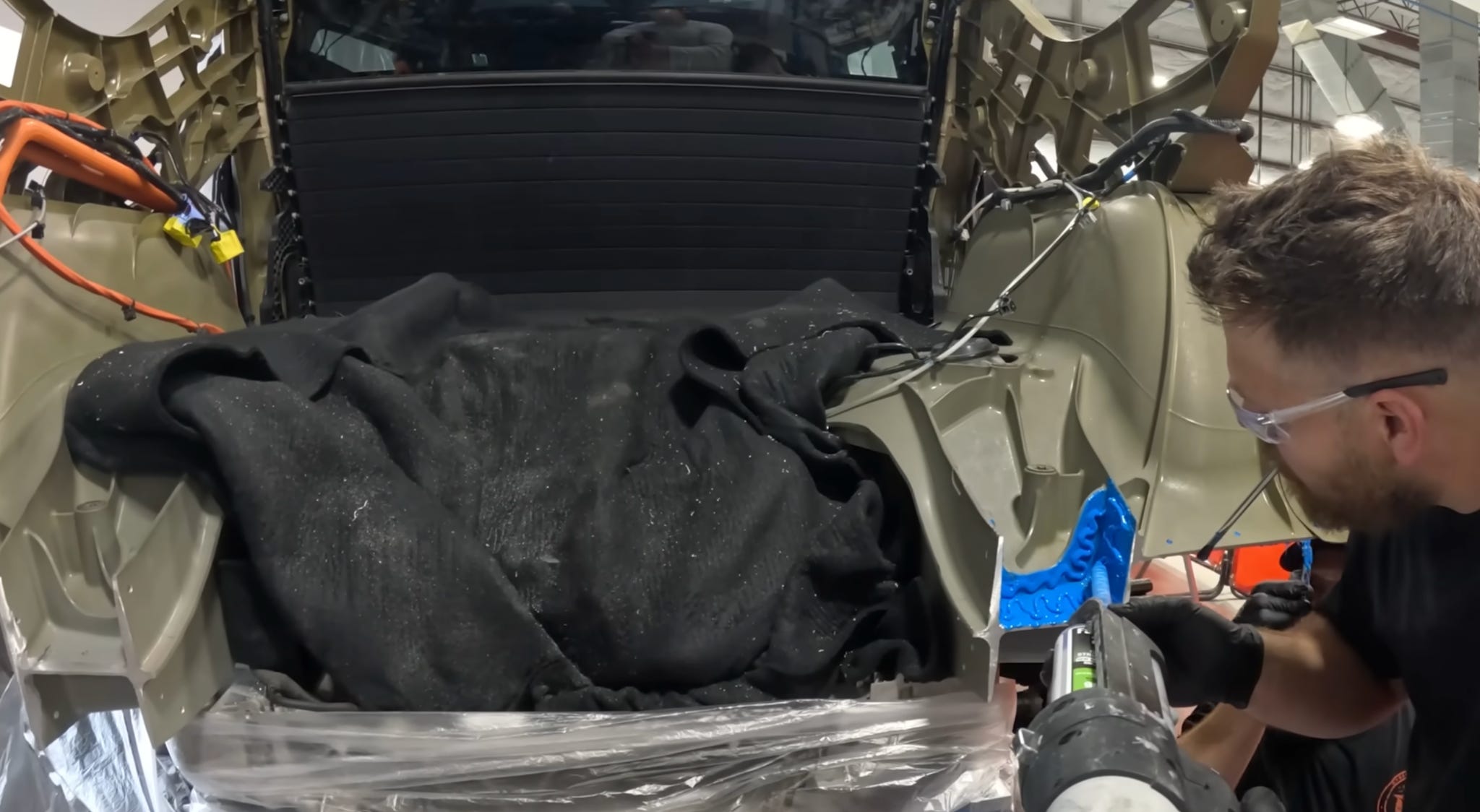
Tesla’s Cybertruck body repair manual is a useful counterpoint to the open repairability question around gigacasting. If you replace several dozen stamped and welded parts with a few giant aluminum castings, does local damage become a total-loss event? The answer appears to be, treat the casting less like a sacred monolith and more like any other structural part: cut out the damaged section, bond and rivet in a replacement piece, and use a crash-durable adhesive like Fusor 2098 to restore the joint. Using glue may sound odd, but adhesives in automotives are not new; they’ve become standard fixtures in the assembly/repair playbook especially as more OEMs mix aluminum, steel, and composites in the same structure. The more interesting move is treating a gigacasting as a sectionable part. Depending on the damage location, a technician can cut areas like the rear end, underbody, or larger casting sections, then bond and rivet in a donor piece. Interestingly enough, the castings already come with sectioning reference lines molded directly into the part.
A bit more about crash-durable adhesives: Fusor 2098 is rated at 22 MPa (3,200 psi) tensile strength, and belongs to a broader category of two-part automotive repair epoxies. JerryRigEverything has a great demo showing why the word “glue” undersells what these materials are capable of, by literally lifting his Cybertruck with a single 2.5-inch glued joint.
In 2014, Google and IEEE hosted a competition called The Little Box Challenge, offering $1M to anyone who could pack a 2 kW power inverter into under 40 cubic inches, about one tenth the state-of-the-art at the time. The Little Box Challenge, 10 Years Later asks what that prize money actually produced, and the answer is: no breakthrough in the traditional sense, but a revitalization of power electronics that led to surprising innovations in other areas. One group pulled the flying-capacitor topology long stuck in academia back into the running, betting that gallium-nitride (GaN) switches had matured, magnetics would be the limit on density, and computation and sensing could now handle the topology’s complexity. That design didn’t win, but a separate entry’s work on the ceramic-capacitor losses behind the 120 Hz ripple buffer later carried over to full-sine motor drives. Not all progress is direct in academia (or life), but curious exploration out in the open can become a public good.
If you’ve ever managed a shared CAD folder out of Google Drive, you already understand the basic premise behind PDM/PLM even if you’ve never heard the acronyms before. At some point, the problem stops being file storage and becomes product control. How PLM works: a primer for engineers to top managers (or anyone, really) is a good plain English explainer of how those acronyms map to the real work around keeping files, part numbers, revisions, BOMs, approvals, and supplier handoffs tied to the same version of reality. PDM, or product data management, is the engineering layer: the vault, metadata, revision history, and parent-child relationships behind a CAD assembly. PLM, or product lifecycle management, extends that discipline past engineering into manufacturing, supply chain, quality, and the outside organizations that eventually have to build the product.
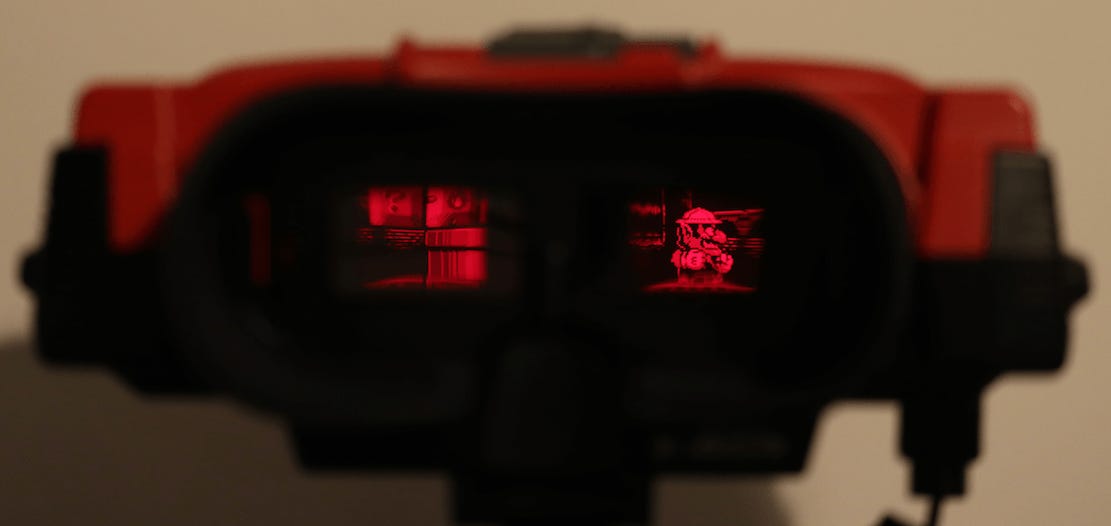
Architecture of Consoles is an architecture and board-level archive of nearly every video game console ever made, starting from 1983 to 2012. In retrospect, some of these designs probably never should have seen the light of day, but the early race to commercialize gaming produced a few truly novel attempts to win the market. In the “fifth generation” of consoles in the mid-1990s, 3D was the new frontier, so every company made a different bet. Nintendo’s was the Virtual Boy, which faked stereoscopic depth by sweeping a single column of red LEDs across each eye with a mirror oscillating fifty times per second. It sold 770,000 units and halted production after a year.
A 2026 version of the old Southern California aerospace corridor, shifting from primes into new-age startups and neoprimes. Click here for the interactive version, along with more regional maps like the Bay Area and Seattle.

Presented by Onshape: Professional Access, 6 Months Free
Onshape provides browser-based CAD and PDM that empowers engineering teams to design and iterate without the friction of files, manual versioning, or local installs. Early adopters in diverse industries report up to 60% faster collaboration workflows and fewer errors, allowing teams to innovate and move designs forward more confidently. With the Onshape Discovery Program, qualified users get up to six months of free Professional access, making it easier to evaluate modern CAD workflows and their impact on productivity.
Learn more below. 👇

Startup News
Standard Bots raised a $200M Series C round at a $1B valuation to scale U.S. built industrial robots. The company manufactures industrial robot arms that can be taught by demonstration, targeting factory tasks like machining, welding, palletizing, assembly, and inspection. They’re expanding its Glen Cove, New York facility to 70,000 sq ft and says it is on pace to deliver 10% of new U.S. industrial robot deployments by next year. The round was led by RoboStrategy, with participation from General Catalyst.
Podium Automation raised a $18M Series A round to scale quick-turn manufacturing for industrial control panels, the electrical cabinets that control factory equipment and other automated systems. The Brooklyn startup uses software to connect customer requirements, eCAD design, component selection, and UL 508A validation, cutting panel lead times from 12+ weeks to under 4. Construct Capital led the round, with participation from Andreessen Horowitz, Transition Ventures, Sunflower Capital, and Banter Capital.
Fabri raised $13.5M in total funding to build a more automated approach to investment casting, the old foundry process used for complex metal parts. The MIT spinout uses 3D-printed wax patterns and production software to cut down on the labor-heavy parts of casting, especially mold prep and post-cast rework (read Issue #110 for a primer on the general methodology). Fabri is already shipping castings to customers including Lockheed Martin and RTX, and is setting up a second foundry targeted for full production in 2027.
NOX METALS raised an $11.5M seed round to expand domestic metal supply for U.S. manufacturers. The company says it has shipped metal to hundreds of American factories since launching production seven months ago. The round was led by Hyperion, with participation from Palmer Luckey, Y Combinator, RoboStrategy, Operator Collective, and others.
Neura Robotics raised a Series C round of up to $1.4B for humanoid robots, with the full amount reportedly tied to performance milestones. The Germany-based company is now one of Europe’s biggest robotics bets, with backing from a mix of U.S. tech giants and European industrial players like Nvidia, Amazon, Bosch, and Schaeffler.
Open Jobs
More jobs added weekly on our job board. If you’re hiring, promote your open role here.
Early Career:
Whoop is looking for an Embedded Engineer in Boston, MA
Mid-Level:
Rivian is looking for a Product Design Engineer (Charging Products) in Torrance, CA
Hadrian is looking for a Process Engineer (Sheet Metal Manufacturing, Special Projects) in Los Angeles, CA
Senior to Staff:
Vast is looking for a Director of Satellite Engineering in Long Beach, CA
OpenAI is looking for an Electrical Engineer, Robotics in San Francisco, CA
Internships:
Tesla is looking for a Climate Controls Calibration Intern (Fall 2026) in Palo Alto, CA
Tools From Our Sponsors
Manufacturing
Express Manufacturing, Inc. – Southern California’s largest EMS provider with 40+ years of end-to-end electronics manufacturing expertise.
Fictiv – On-demand custom manufacturing from prototype to production.
Loombotic – Instant-quote custom wire harnesses. Upload drawings or design online, fast turnaround.
Blitzpanel – Custom control panels made fast and easy. Design online for instant pricing or let us design for you.
Design & Simulation
nTop – Computational design to accelerate product development.
Onshape for Startups – Free access to Onshape Professional or Onshape Government (compliant with ITAR/EAR) for hardware startups and entrepreneurs.
Access Every Link We’ve Ever Shared 🎞️
Refer three friends to Hardware FYI and unlock our full archive.
Missed an issue? Hunting for that one link? Every tool, guide, and article we’ve ever shared is in here.
P.S. If you find something interesting—an article, tool, funding round, project, really anything—send it our way.
P.P.S. 20,000+ engineers, founders, and operators read this newsletter. If you want to reach them, get in touch.
One of those details never discussed but comes up when you are ready to apply the glue:
Success of adhesives is largely dependent upon surface preparation; follow the instructions 🤠
It's not too surprising that one would use adhesive on a car body - e.g. Bondo + paint to make it look perfect. What would be a bit surprising is if they can get this visually acceptable without paint to cover the imperfections. Depending, any imperfections/lines might look cool, but it still says "I've been in a wreck."