
Hardware Doesn’t Move at Software Speed
The Analog #170


Quick programming note: Early Bird tickets for Kinetic (May 12–13, SF) moved faster than we expected, so we’ve opened a second batch! If you were planning to come, now’s a good time to register and lock in discounted pricing.
Onshape is offering hardware startups and entrepreneurs free access to Onshape Professional or Onshape Government (compliant with ITAR/EAR). Apply for the program to get started today.
Interesting Links
Six Things I Learned Watching a Robotics Startup Die from the Inside is a fascinating and unvarnished account from the former COO of a YC-backed robotics startup K-Scale Labs, which shut down after failing to secure Series A funding. We’ve written about K-Scale’s open humanoid approach before, previously from the outside looking in on why the company shut down; the founder candidly said on a podcast he’d oversimplified the capital-raise side. This post flips the vantage point to the inside focusing on the engineering and timeline decisions behind turning a humanoid demo into a real product. He frames it as a set of mistakes and familiar startup tropes around treating hardware as a commodity, assuming software can replace mechanical redundancy, and running on schedules disconnected from physical reality. The more you rush, the further you fall behind.
“When you make promises to your contract manufacturer based on fantasy timelines, you burn the relationship. A CM needs realistic expectations to plan their own production. A chaotic “move fast, break things” mindset might work in software. It does not work when your manufacturer is allocating factory floor time based on commitments you can’t keep.”
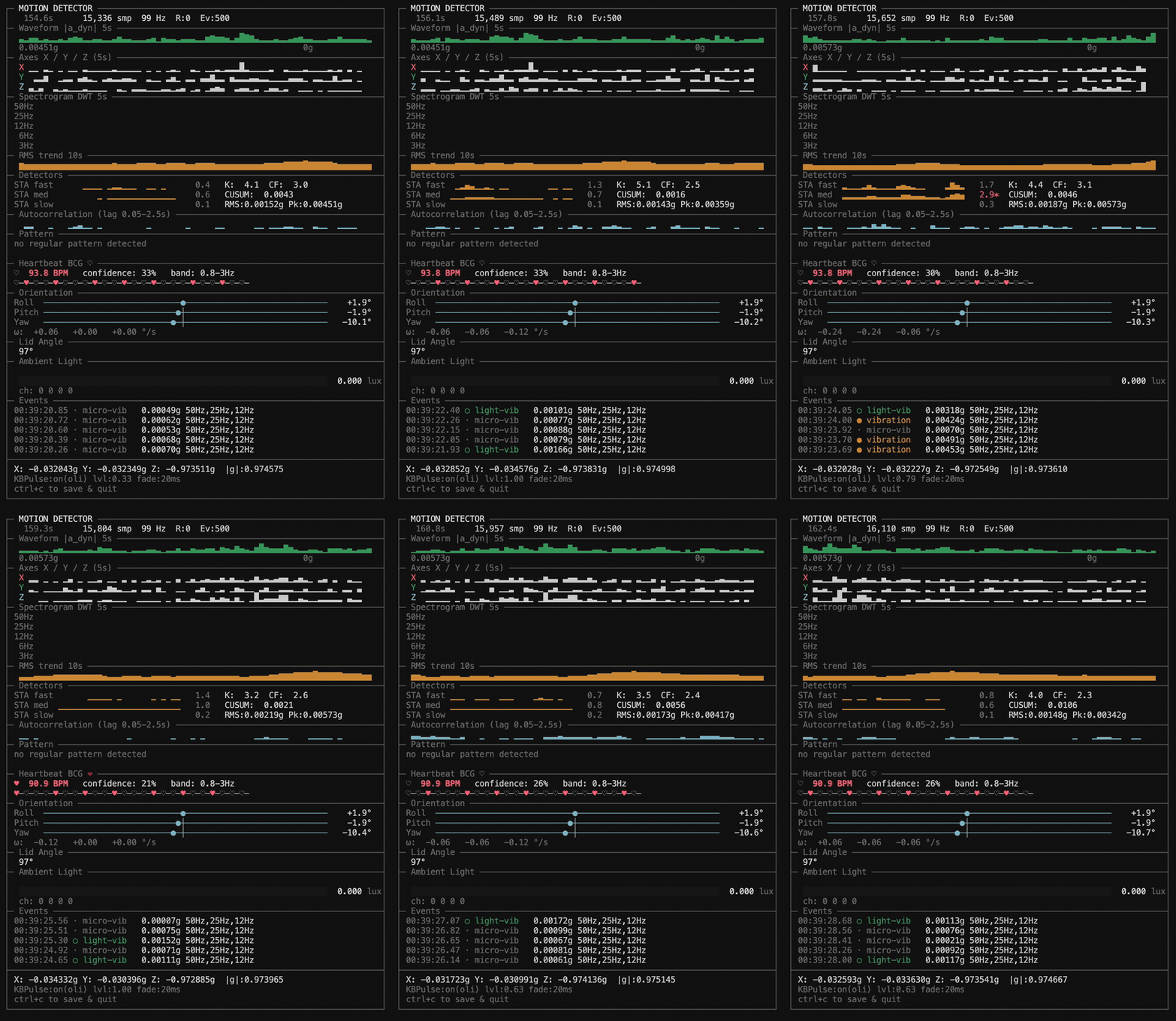
A nice bit of low-level spelunking: Apple-silicon MacBooks expose an internal accelerometer stream through an undocumented AppleSPU HID interface. The sensor is an undocumented MEMS IMU (likely a Bosch BMI286, accelerometer + gyroscope) that isn’t surfaced through any public API, and part of a lineage that threads online trace back to the PowerBook-era sudden-motion sensor, originally used to detect falls and park spinning hard drives before impact. The trick is locating the AppleSPUHIDDevice in macOS’s I/O Registry, opening it via IOKit’s HID interface, and decoding its fixed 22-byte input reports into x/y/z acceleration and rotation values. After that, it’s just a live sensor stream, which the demo uses for vibration analysis and even a rough heartbeat detection demo. Full repo. and implementation details linked here.
The Absolute Basics is a short, practical repair guide built on a simple premise: though most engineers are good at making things, far fewer are good at “unmaking” them — even though breaking the seal on other designs, whether to repair or simply understand them, is one of the fastest ways to learn how real hardware works. It sits within a broader repair community focused on sharing maintenance knowledge, guides, and tools, emphasizing how to fix classes of devices by breaking them down into core elements rather than chasing model-specific instructions. It walks through essential knowledge like fault isolation, visual inspection, teardown habits, and simple electrical checks.
A quick intermission break: we’re excited to announce our next Kinetic speaker, Keenan Wyrobek, Co-Founder & CTO of Zipline! For those unaware, he’s also the co-creator of ROS and currently oversees the engineering behind one of the world’s largest autonomous drone fleets.

Early Bird tickets for Kinetic (May 12–13, SF) moved faster than we expected, so we opened a second batch. If you were planning to come, now’s a good time to register before prices increase.
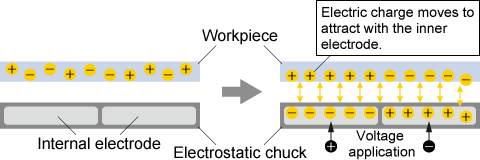
Japanese bathroom giant Toto is best known for toilets and bidets, but investors are now arguing that it may be an overlooked and key beneficiary of the AI infrastructure boom. The connection runs through electrostatic chucks: ceramic plates inside semiconductor tools that use electrostatic force to clamp the wafer in place during plasma etch and deposition. As chips become more layered and memory stacks grow taller, fabs are increasingly using cryogenic and tightly controlled processes that demand highly stable electrostatic wafer clamping. Toto has produced these ceramics since the late 1980s, leveraging materials expertise developed in its sanitary business that now connects toilets to AI infrastructure more directly than anyone expected.
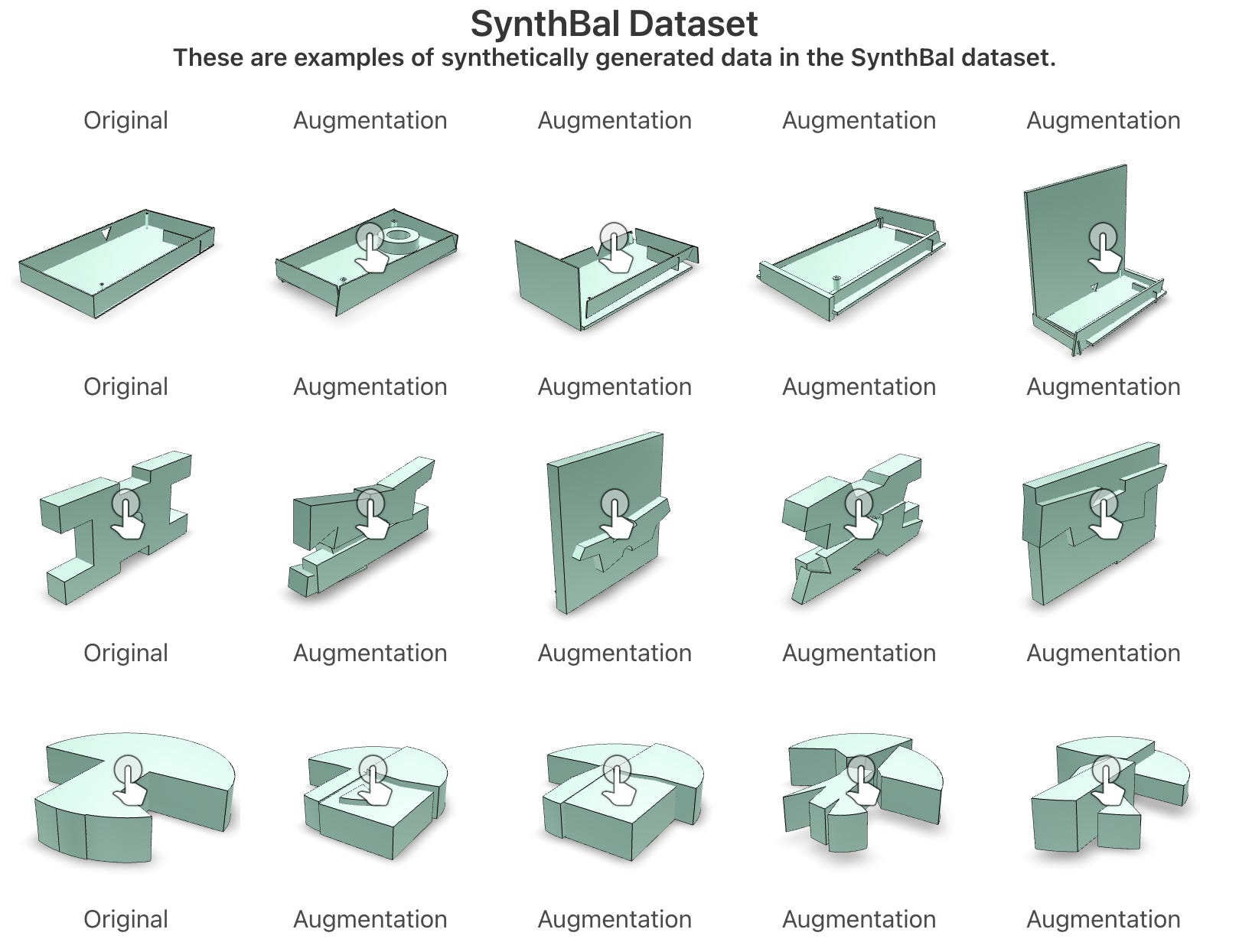
In a Blueprint podcast episode, MIT Decode Lab researcher Nomi Yu explains why training AI on CAD data is harder than it looks. The largest public datasets are often largely simple prismatic geometry (cylinders, boxes, extrusions), with functional production-intent parts a small fraction of the total. Yu’s GenCAD 3D research corrected this with synthetic data; even geometrically unrealistic parts improved model performance, because fixing the distribution mattered more than realism. Data quality is one challenge; representation is another. Feature trees attempt to record design intent and the parametric history an engineer uses to make revisions. Export that file as STEP or BREP and the geometry survives, but the reasoning and parameters often do not. This matters because the design process itself is how constraints get discovered; the thinking that shapes revision two is often only available because of what happened in revision one. A model trained on exported files learns shapes, but has no access to those stakes — and neither does the engineer trying to re-enter a design they didn’t build.
And one fun link to round out the week: using mass spectrometry to replicate Coca-Cola’s formula; reconstructed recipe in the video comments.
DRCY: AllSpice’s AI Design Review Agent
Meet DRCY, AllSpice’s AI-powered agent built specifically for hardware design reviews. DRCY runs first-pass checks on schematics and datasheets to surface critical errors early, such as config errors, voltage mismatches, and much more. Hardware teams can spend less time on rechecks, more time innovating, and ship with confidence.
Give DRCY a try here.
Startup News
World Labs raised $1B in new funding, including a $200M strategic investment from Autodesk to advance its “world model” systems that generate and reason about 3D environments. The partnership will explore integrating World Labs’ spatial AI models with Autodesk’s CAD tools, beginning with entertainment workflows. World Labs’ first product allows users to generate and edit downloadable 3D environments, while Autodesk is developing “neural CAD” models trained on geometric data to generate functional 3D designs. The round also included participation from AMD, Nvidia, Emerson Collective, and Fidelity.
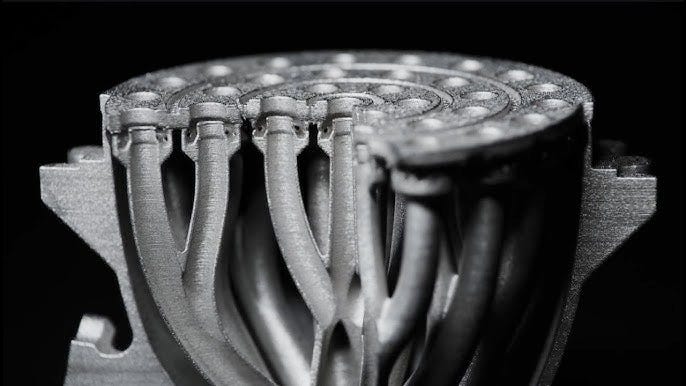
Freeform raised a $67 million Series B round to scale its metal additive manufacturing technology alongside the launch of Skyfall, a high-speed laser metal melting platform designed to accelerate industrial metal production. The company operates multi-laser powder bed fusion systems with in-house robotics, sensing, and process control to manufacture metal components in a production factory setting rather than a prototyping lab. Investors include Founders Fund, Threshold Ventures, and NVIDIA’s NVentures.
Code Metal raised a $125M Series B round to scale its verifiable code translation platform for mission-critical industries. The Boston-based startup helps customers translate legacy or AI-generated software across programming languages and hardware environments, optimize it for specialized or edge compute, and then formally verify the output before deployment in safety-critical systems. Customers include Toshiba, RTX, L3Harris, and the U.S. Air Force. The round was led by Salesforce Ventures, with Ryan Aytay (former CEO of Tableau) joining as President and COO.
Heron Power raised a $140M Series B round to scale production of its solid-state transformers for data centers and grid applications. Solid-state transformers replace century-old iron-core designs with semiconductor-based power electronics; the company’s units convert medium-voltage power to 800V rack-level output, handling up to 5 MW per device while replacing traditional transformer and UPS architectures. The round was led by a16z’s American Dynamism Fund and Breakthrough Energy Ventures, with funding earmarked for a factory targeting 40 GW of annual production capacity.
Efficient Computer raised a $60M Series A round to develop its general-purpose, low-power processor architecture for AI and embedded workloads. The company’s Electron E1 is built on a spatial dataflow architecture designed to reduce data movement compared to conventional CPU and GPU designs while remaining programmable. The round was led by Triatomic Capital.
Open Jobs
More jobs added weekly on our job board. If you’re hiring, promote your open role here.
Sponsored:
Anduril is hiring for a PLM Product Manager in Costa Mesa, CA
Early Career:
Google is looking for a Product Design Engineer (Phones) in Chicago, IL
Mid-Level:
AMD is looking for a Thermal Mechanical Engineer (Icepak/CFD) in Secaucus, NJ
Aurora is looking for an Electrical Engineer in Mountain View, CA
Senior to Staff:
Chef Robotics is looking for a Head of Hardware in San Francisco, CA
Internships:
Heron Power is looking for an Applications Engineering Intern in Scotts Valley, CA
Sublime Systems is looking for an Engineering Co-op in Somerville, MA
Tools From Our Sponsors
Manufacturing
Express Manufacturing, Inc. – Southern California’s largest EMS provider with 40+ years of end-to-end electronics manufacturing expertise.
Summit Interconnect – Quick-turn complex rigid, flex, and rigid-flex PCBs.
Fictiv – On-demand custom manufacturing from prototype to production.
Loombotic – Instant-quote custom wire harnesses. Upload drawings or design online, fast turnaround.
Blitzpanel – Custom control panels made fast and easy. Design online for instant pricing or let us design for you.
Design & Simulation
Quilter – Fully automates PCB layout with physics-driven AI.
nTop – Computational design to accelerate product development.
Onshape – Cloud CAD with real-time collaboration and version control.
Ops & Collaboration
Doss – Adaptive ERP for orders, inventory, and production.
Access Every Link We’ve Ever Shared 🎞️
Refer three friends to Hardware FYI and unlock our full archive.
Missed an issue? Hunting for that one link? Every tool, guide, and article we’ve ever shared is in here.
P.S. If you find something interesting—an article, tool, funding round, project, really anything—send it our way.
P.P.S. 20,000+ engineers, founders, and operators read this newsletter. If you want to reach them, get in touch.