
Pickleball’s Composite Problem
Disposable paddles, the art of removing components, a self-sharpening pencil, and more.


Topics worth your time: how a composites technique turns pickleball paddles into consumables, why infrastructure announcements and operational capacity are very different measures of AI’s buildout, the art of 'Muntzing', and mechanical pencil mechanisms.
P.S. We’re back in SF for another happy hour on 8/11! We’re setting aside a few tables for teams with demos, or other work they’d like to bring into the room. If that’s you, send us an email.

Interesting Links
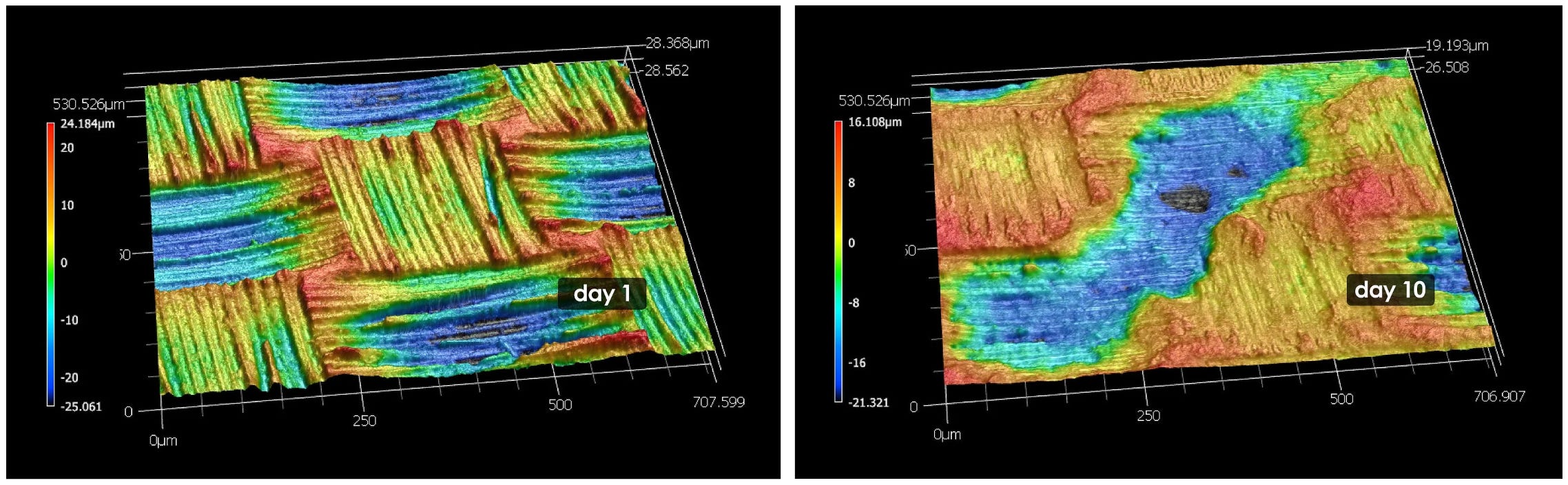
Consumables create recurring demand, and for a newer market where a piece of equipment can become disposable in three to six months, look no further than pickleball paddles. One small test of a carbon-face paddle found a ~50% drop in measured surface roughness after 30 simulated sessions. These “raw carbon fiber” paddles follow a familiar composite sandwich construction: a polypropylene honeycomb core, carbon-fiber skins on either side, and cured resin binding it together. To give the face its roughness, manufacturers will press a temporary woven fabric called peel ply into the outer resin during curing, then pull it off. It's normally a technique used to leave a textured surface for a later bond/finish, but in pickleball, it serves as the playing surface. That manufacturing detail leads to a convenient business consequence where surface wear renders the equipment obsolete.
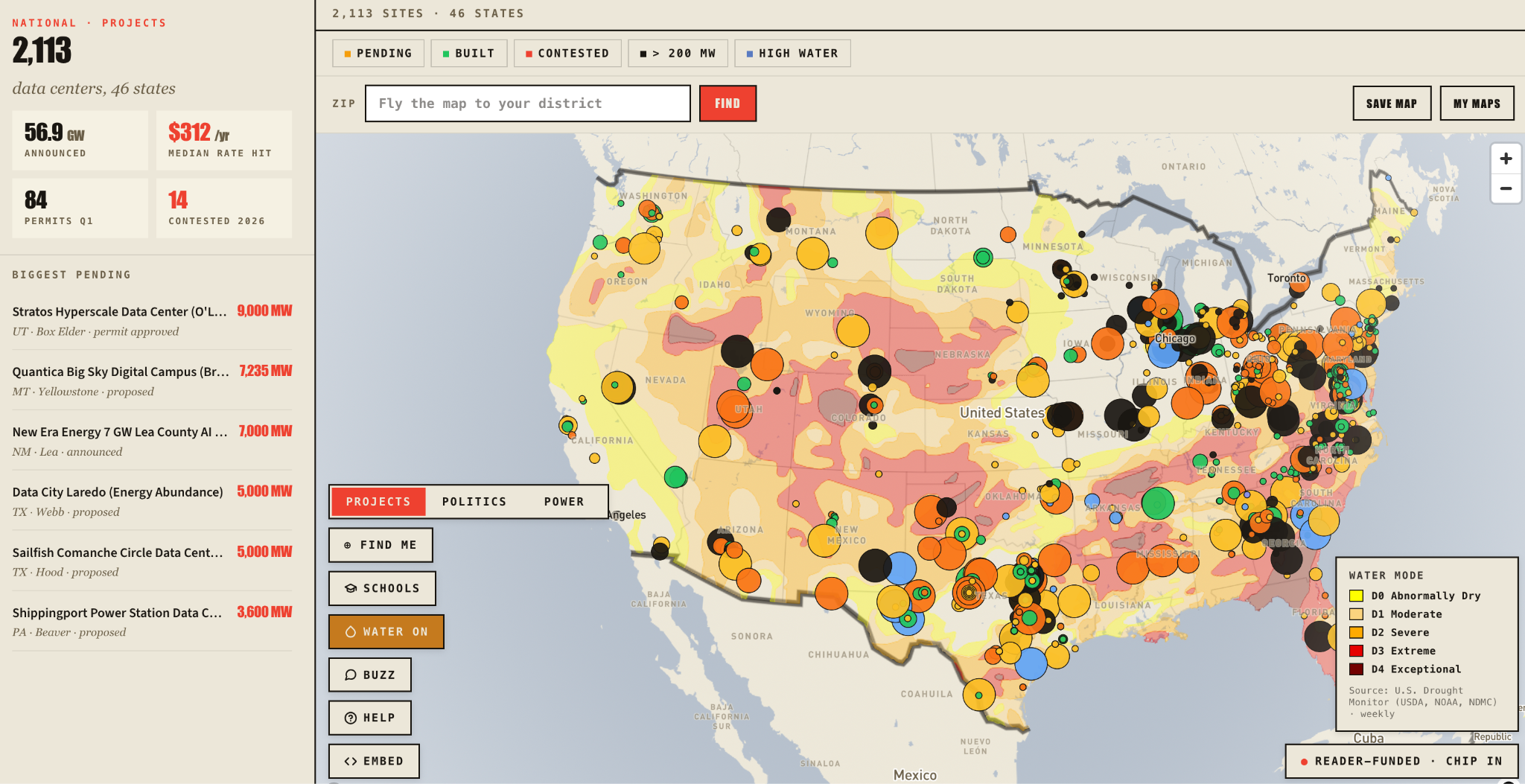
PoweredByWho is a real time tracker of announced and underway data center construction. It also tracks news stories, permits, and public perception toward new AI focused energy infrastructure over time. This work (and other efforts), provide excellent data on the scale of the buildout, as well as the geopolitics across state permitting. It’s worth distinguishing between announced and operational data centers, an important and deceptively hard question to answer. Ed Zitron spends the entirety of a ~40 minute essay to independently conclude that only a few hundred megawatts of usable compute capacity is coming online, not the stated gigawatts per-quarter narrative.
A reminder that 1 MW is 106 watts; 1 GW is 109 watts - one billion watts. Scope insensitivity describes why scale can be hard to feel.
One reductive method for cost engineering is a technique known as Muntzing, simply removing components from a product until it stops working, then putting the last one back. In the mid-20th century, early television sets were complex assemblies of vacuum tubes and passive electronic components, far from the commodity product that exists today. To hit a lower price point, Earl “Madman” Muntz would reportedly walk up to his design engineer’s workbench, snip components from a working television circuit, and stop only when the picture or sound failed. While not exactly the most disciplined process, Muntz was able to bring TVs to market for under $100, less than a quarter of the price of the cheapest alternative.
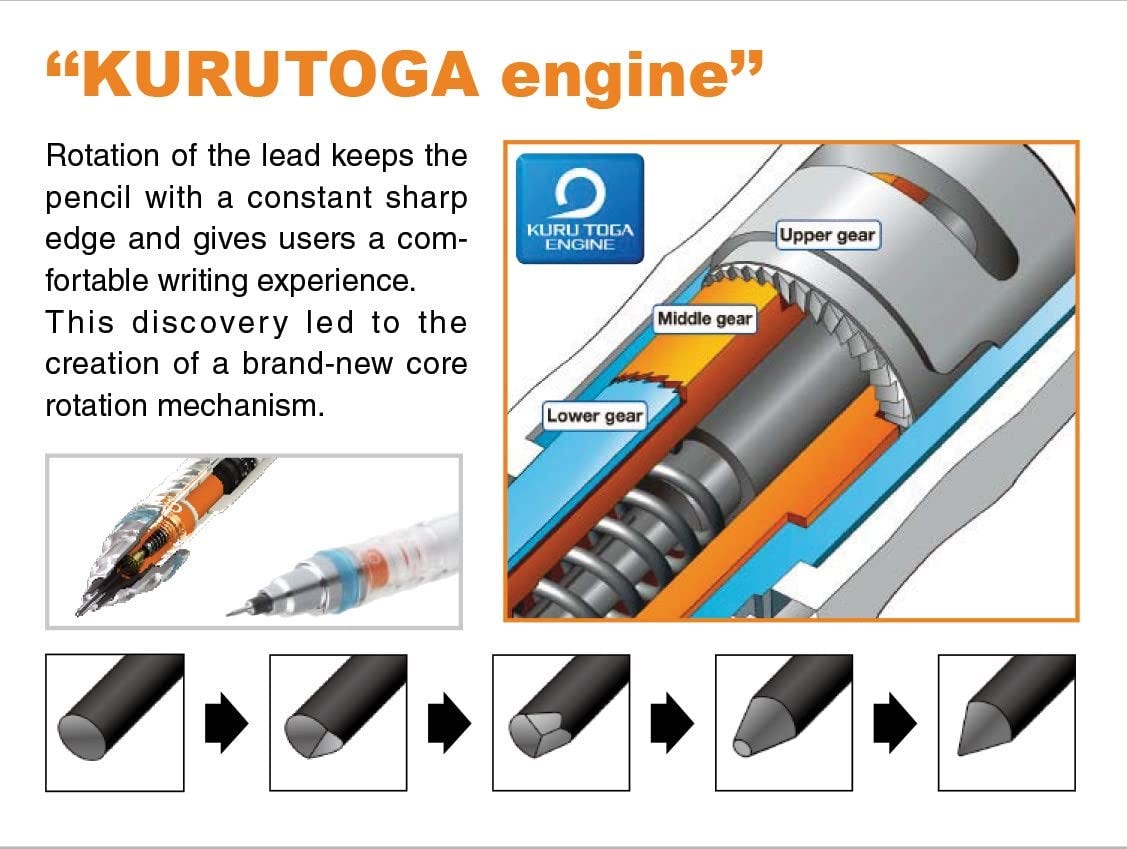
The Kuru Toga mechanism is a good example of the small, clever mechanisms hiding in everyday objects. By introducing a unidirectional ratchet and spring, the pencil rotates using the variable pressure of writing. This simple mechanism allows the pencil to self-sharpen, resulting in crisper, more consistent lines. The pencil has gotten a few upgrades since its introduction in 2008 (such as automatic graphite dispensing). The ratcheting mechanism itself is a marvel of materials engineering, with sub-mm plastic teeth capable of surviving hundreds of thousands of cycles of ratcheting and still remaining functional (Cooper has used one since 2016). While the exact polymer isn’t disclosed, it is a textbook case for self lubricated plastics like PTFE filled Acetal - low load, high cycles, limited volume.
Dragon Innovation’s (now archived) resource page is a master list of helpful sources across prototype & model shops, engineering consulting services, packaging, branding, digital design, and more. Though dated, and if we were to guess, the recommended sources reflect decades of accumulated expertise across multiple disciplines.
If you’re reading this and have the expertise, someone should make the equivalent for machining, industrial infrastructure, shop operations, and everything else that keeps factories running!
And a couple more links to round out the week:
A reader submission from John at PCBWiki - a nine-step framework to PCB bring-up.
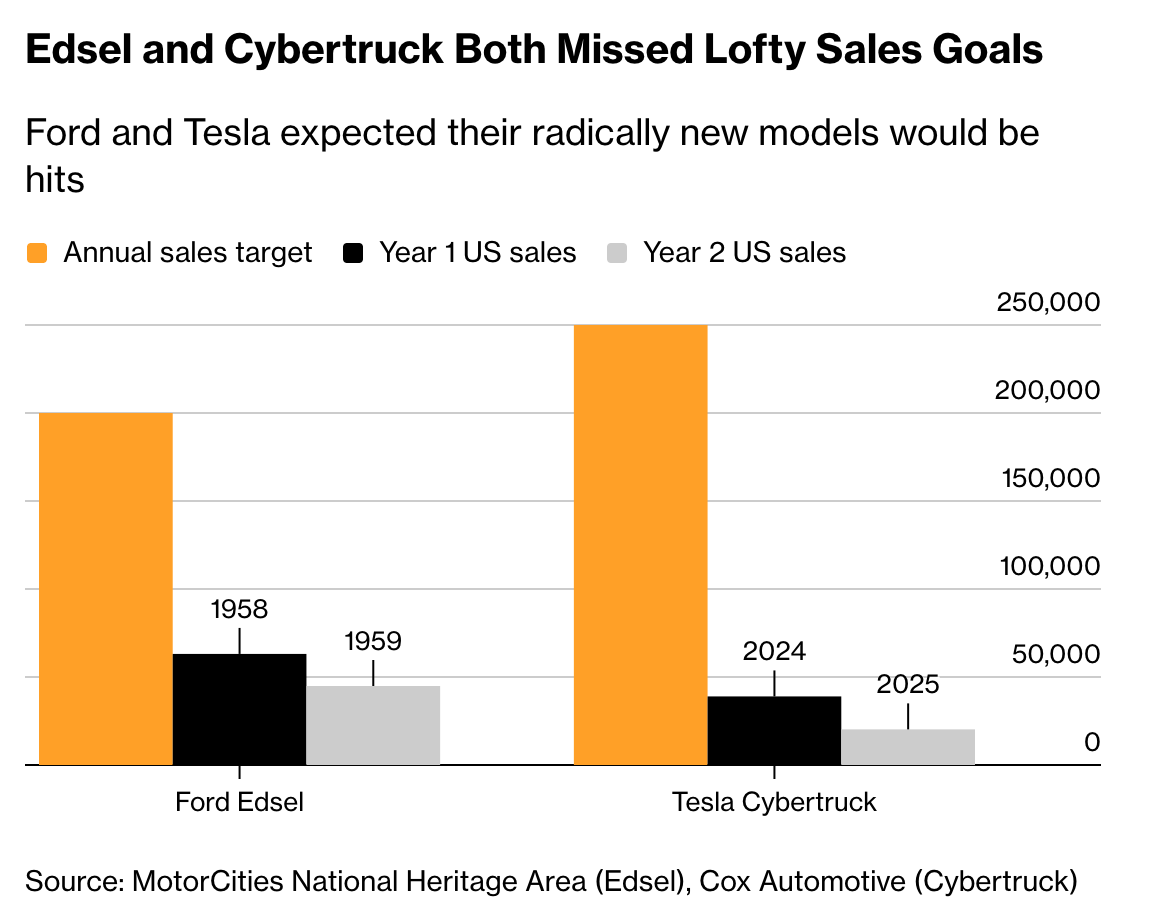
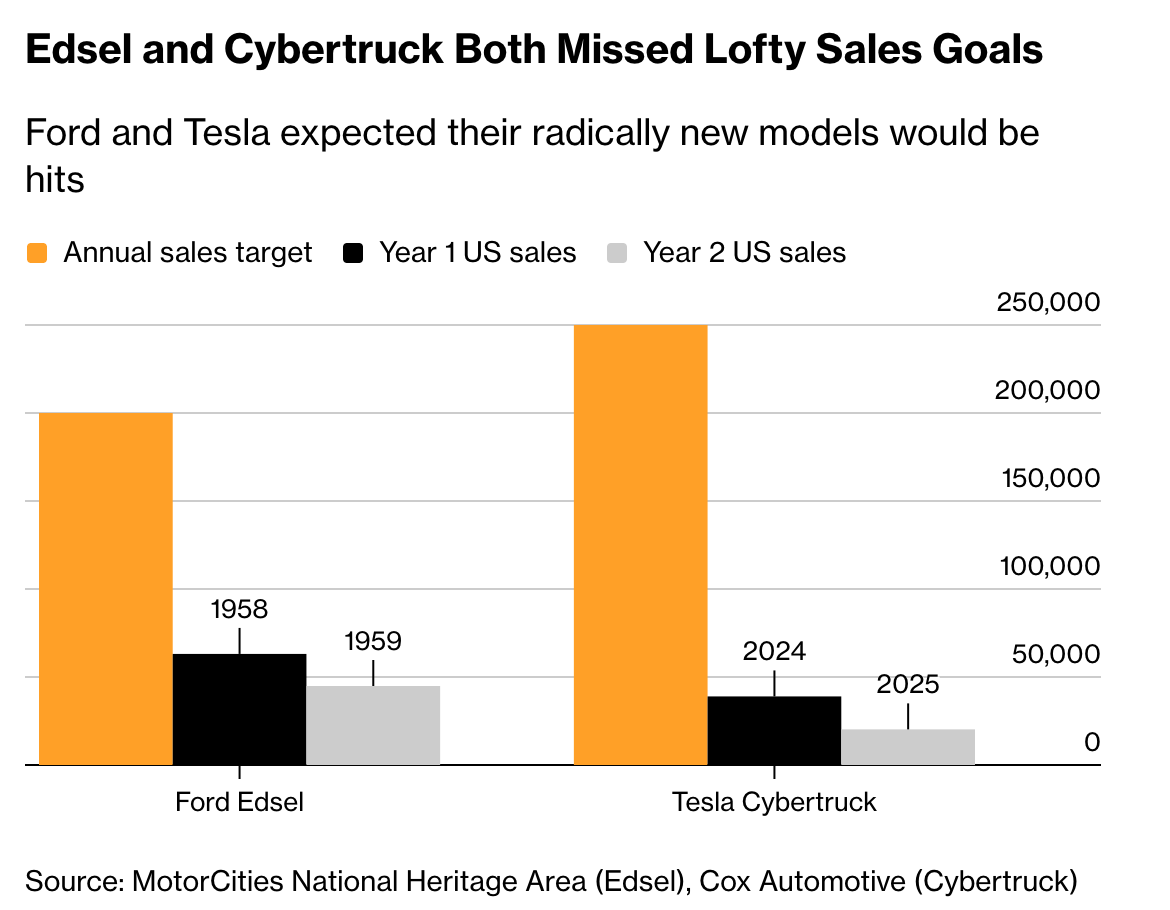
For all its engineering marvels, the Cybertruck registered only 7,133 vehicles in the US through May, according to data reported by Bloomberg.
Sponsored: Zoo is hosting a virtual API Makeathon open through 8/5 - prizes include a Bambu Lab 3D printer and API credits.
Presented by: Quilter Now Supports Automated BGA Fanout
Fanning out a BGA is one of the first things a designer does on a dense board, and one of the most manual and tedious: pick a via pattern, choose an escape direction for every ball, get the signals to the perimeter. Quilter now does it automatically. Its physics-driven AI selects via patterns, escape directions, and breakout traces from your placement and stackup, then routes the rest of the board around a fanout it chose.
It’s in beta and covers square-grid ball arrays for now. It’s one of fifteen features Quilter shipped in H1 2026.

Startup News
Valar Atomics raised a $1B Series B led by Sequoia to mass-produce its small nuclear reactors and build its own fuel supply chain. Valar recently became the first startup to generate nuclear power, using its Ward 250 reactor to power an NVIDIA Blackwell GPU.
Base Power raised a $1B Series D at a $13B post-money valuation to expand its residential battery network. The company installs and retains ownership of 39.2 kWh home batteries, selling stored electricity back to the grid during periods of high demand. Base has deployed more than 500 MWh of storage across Texas and Illinois, and is installing roughly 100 batteries per day. The round was led by Ribbit, Addition, and Valor Equity Partners among others.
Antora Energy raised a $550M Series C to expand production of thermal batteries for data centers and industrial facilities. Its systems use low-cost electricity to heat carbon blocks, storing energy as heat that can later produce steam or electricity; Antora is commissioning a 5 GWh project at a South Dakota ethanol plant. The round was co-led by G2 Venture Partners and Eclipse.
Array Labs raised an additional $21M in a strategic investment round to develop satellite-based aircraft tracking services for defense and security customers. The company is building clusters of radar satellites that operate as a distributed sensor, and has research contracts with DARPA, the U.S. Navy, and Air Force. The round was led by Mitsubishi Electric.
K2 Space raised a $500M Series D to scale production of its large, high-power satellites, following the launch of its first satellite in March. The company’s first satellite, Gravitas, produces 20 kW of onboard power, and K2 plans to introduce a 100 kW model, Giga, in 2028. The round was led by Kleiner Perkins and ICONIQ.
Open Jobs
More jobs added weekly on our job board. If you’re hiring, promote your open role here.
Sponsored:
Heirloom is looking for a Senior Mechanical Engineer in Brisbane, CA
Early Career:
Northwood is looking for an Electronics Test Engineer (Early Career) in Torrance, CA
Mid-Level:
First Resonance is looking for a Product Manager, Supply Chain in Los Angeles, CA
Senior to Staff:
comma.ai is looking for a CNC Machinist / Head of Prototyping in San Diego, CA
Tools From Our Sponsors
Design & Simulation
Duro — AI-native PLM that centralizes part data, manages change orders, and connects the whole stack so your team can focus on execution, not administration.
nTop – Computational design to accelerate product development.
Onshape for Startups – Free access to Onshape Professional or Onshape Government (compliant with ITAR/EAR) for hardware startups and entrepreneurs.
Manufacturing
Loombotic – Instant-quote custom wire harnesses. Upload drawings or design online, fast turnaround.
Xometry — Instant quoting on custom parts, from R&D prototypes to high-volume production runs.
Blitzpanel – Custom control panels made fast and easy. Design online for instant pricing or let us design for you.
Express Manufacturing, Inc. – Southern California’s largest EMS provider with 40+ years of end-to-end electronics manufacturing expertise.
Fictiv – On-demand custom manufacturing from prototype to production.
Access Every Link We’ve Ever Shared 🎞️
Refer three friends to Hardware FYI and unlock our full archive.
Missed an issue? Hunting for that one link? Every tool, guide, and article we’ve ever shared is in here.
P.S. If you find something interesting—an article, tool, funding round, project, really anything—send it our way.
P.P.S. 20,000+ engineers, founders, and operators read this newsletter. If you want to reach them, get in touch.