
Goodbye, Board Spins
Liquid metal circuit boards, actuator factories, direct modeling, and world models for robots.


Topics worth your time this issue: the wearable accuracy landscape charted around Fitbit Air’s launch, the old synchronous vs. history-based CAD debate, Itera’s reconfigurable liquid metal circuit boards, and an inside look at Matternet’s drone delivery economics.

Interesting Links
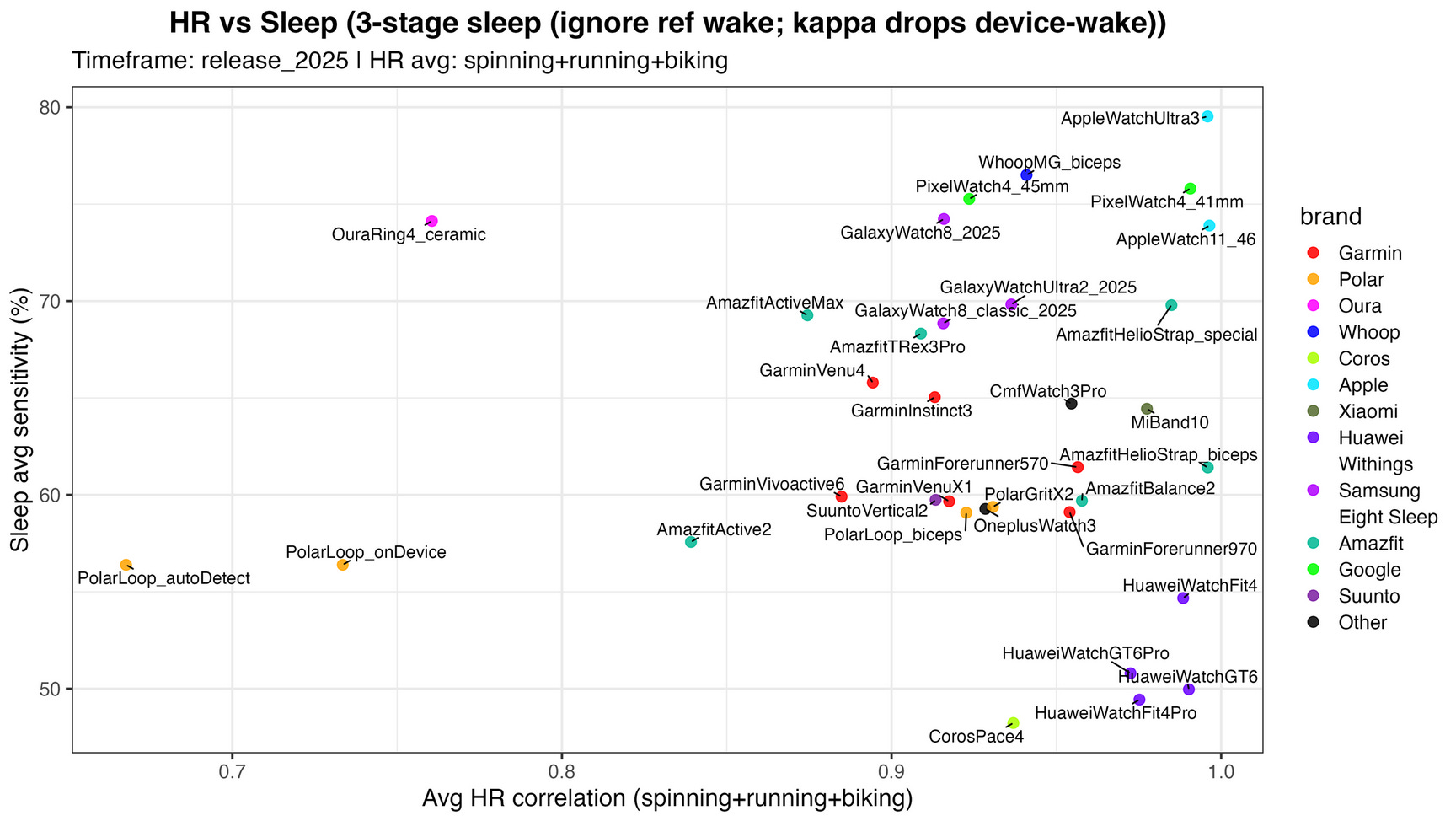
In honor of the Fitbit Air launch: the wearable accuracy landscape plotted by heart-rate accuracy vs. sleep staging across the major devices. Measured against a chest strap for HR and a Dreem 2 EEG headband for sleep stages.
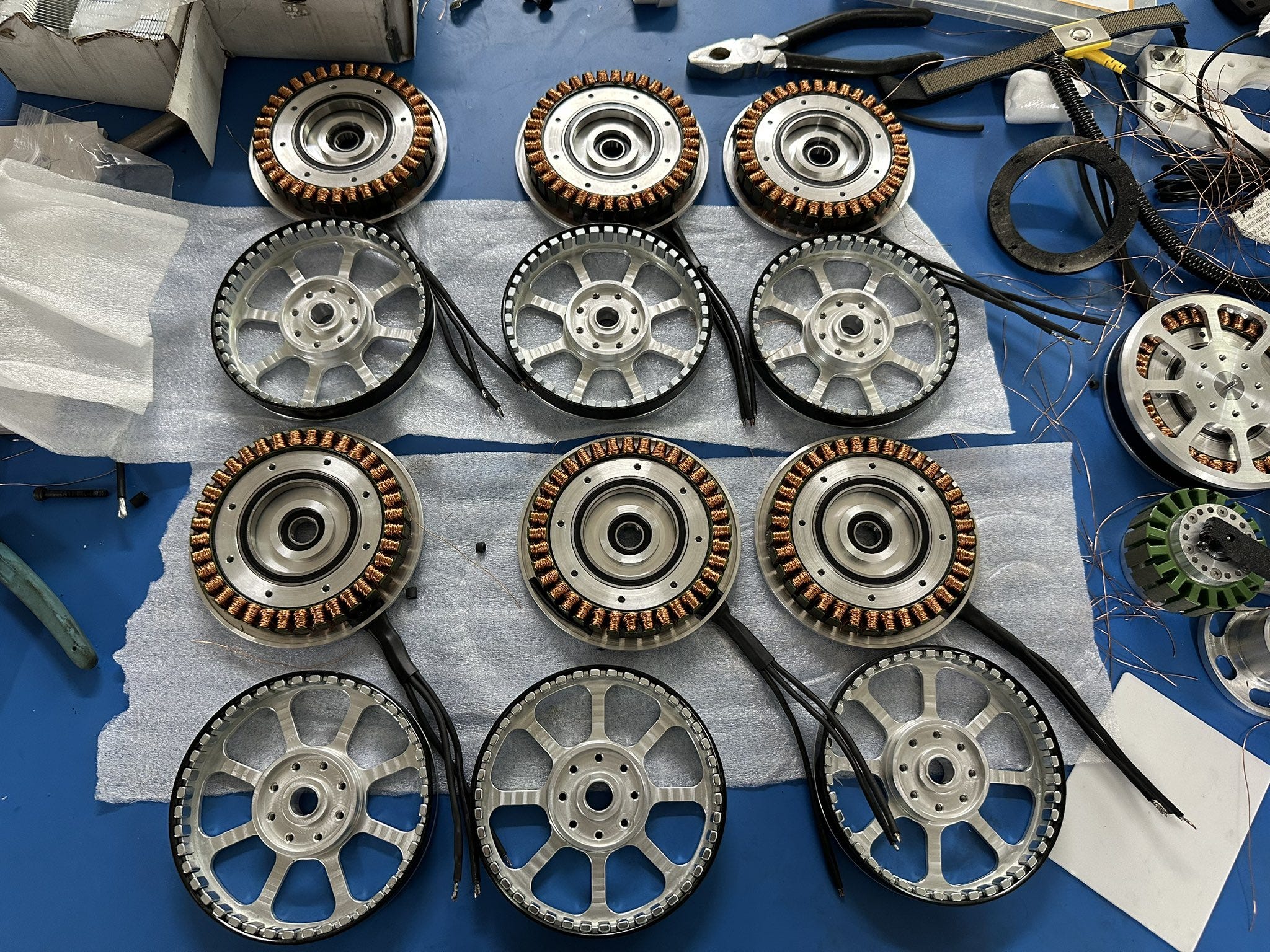
Building the American Actuator Company is Parth Ingle’s account of why the hard part of brushless motor production turns out to be the factory, not the motor. Actuator and motor design can feel abstract (especially when dealing with electromagnetics), but the build sequence is less exotic than it sounds. Simply follow the order of operations: 1) machine the housings and rotors, 2) wind the stators, 3) insert the magnets, 4) press-fit the subassemblies and close the motor, 5) run QC. The more interesting engineering lesson is the tooling decision. Saturn’s thesis is that in the medium-complexity production regime, building custom line machinery can outcompete specialized toolmakers, especially when factoring in lead times. An OTS magnet-insertion machine cost $12k+ and took 45 days to ship; their in-house version cost $900 and can dispense glue and push arc magnets into a rotor in about 60 seconds. Their next CNC mill design is expected to cost ~$7k and replace an ~$80k commercial machine. Instead of waiting months or debugging machines they didn’t design, Saturn’s bet is that by owning tooling, they can stand up lines faster and encode the process internally. Equally important, Parth notes that QC and metrology are not areas they want to spend cycles on. Good to know what you don’t know.
A good argument for synchronous modeling comes from Matt Lombard, a SolidWorks expert best known for the SolidWorks Bible, who spent most of his career writing best-practice guides for the opposite paradigm. Before the recent AI CAD wave, this was the dominant CAD debate: should models preserve the history of how they were built, or should the final geometry be all that matters? History-based CAD treats the feature tree as the source of truth; synchronous modeling treats the geometry as the source of truth. Lombard’s point is that a lot of CAD “best practice” exists to manage the fragility of history-based models. The catch is that the best direct-modeling workflows, especially NX, are usually locked behind enterprise licensing. Plasticity is a tool we’ve heard of in recent conversations that offers the same basic promise: direct modeling for complex CAD, at a fraction of the cost.
“I found models that had all of the history of how a person got to where they were: add some geometry, cut some away, add more, cut more. Every change was a new feature. From a history-based point of view, people who modeled like this looked like idiots. But from an independent point of view, why not? They were just doing what was intuitive. Why should it matter how you got where you are?
When the only method you have is history-based design, you spend a significant amount of effort just making that run properly. But it turns out most of that is unnecessary. Stop worrying about ‘how,’ and put more energy into design. Or just go home earlier every day.”
A grab bag of useful supplier lists, new prototyping tools, and other things worth checking out:
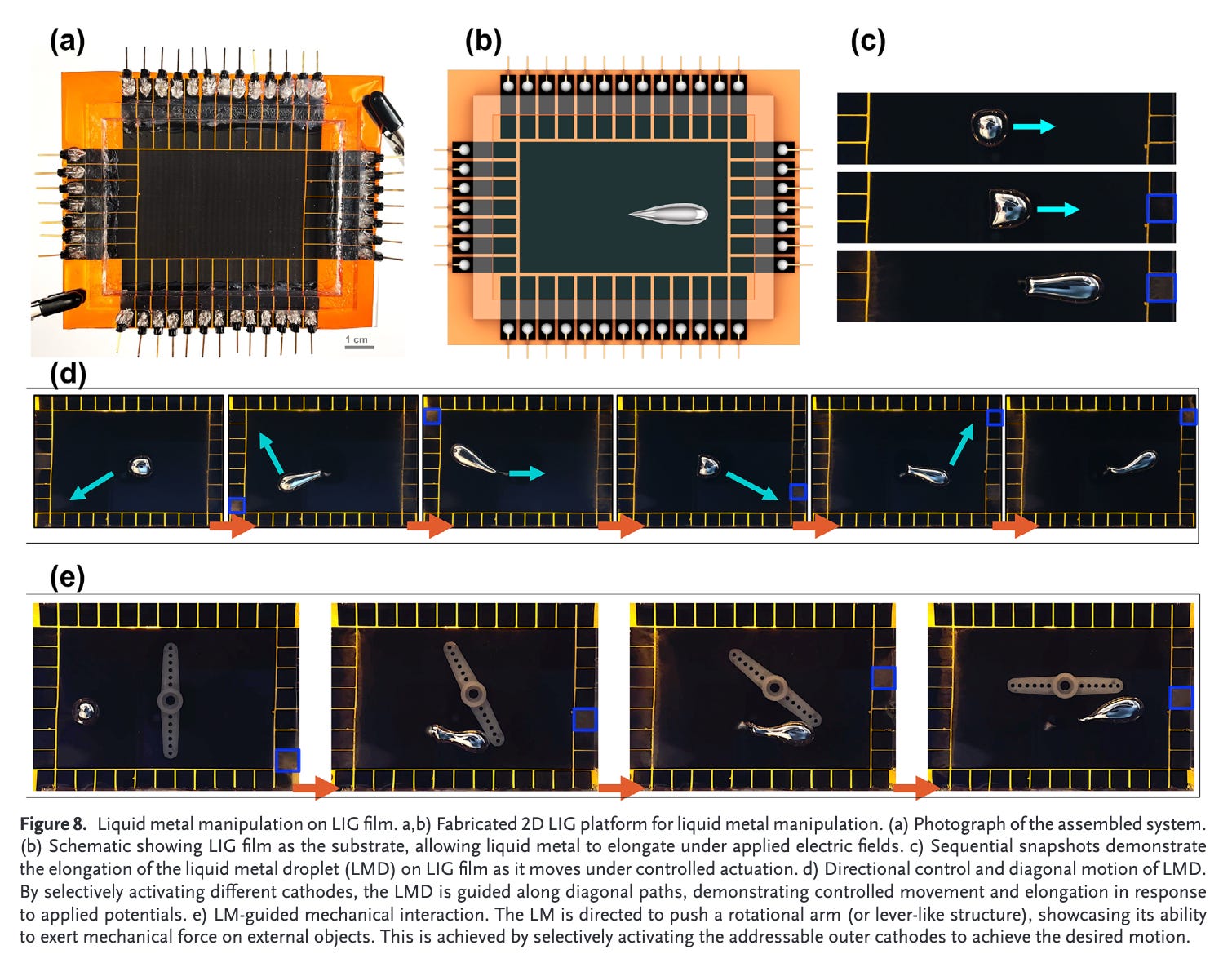
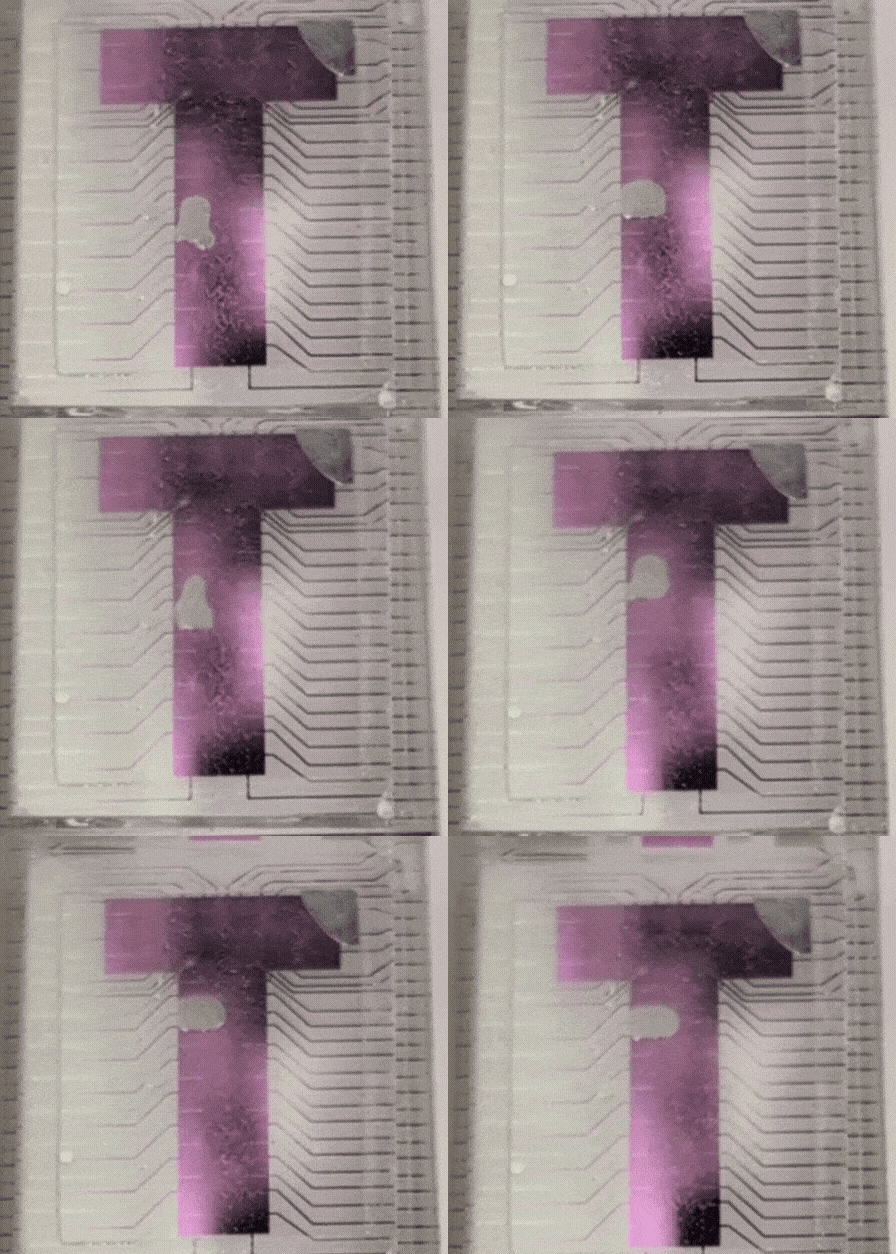
itera.co is a new prototyping tool for building reconfigurable, single-layer circuit boards with liquid metal traces. The technical lineage looks like it follows recent work from the MIT Media Lab and Michael Dickey’s research group at NC State on programmable continuous electrowetting. The basic idea is to move gallium-based liquid-metal droplets across a flat surface using small voltages. Laser-patterned graphene regions on the surface can then make the metal move forward, stop, or reverse direction. In effect, the liquid metal becomes a rewritable trace instead of fixed copper traces. (AJ, the founder, has been a longtime Hardware FYI reader, and we’re especially curious to try it ourselves).
On supplier lists, see Cove Design’s preferred vendor list (4/26) and partsmadefast.com, a WIP directory for quick-turn manufacturers. Anecdotally, almost every company keeps its own preferred vendor spreadsheet by process. You work with the shops you trust!
Matternet’s SPAC filing offers a rare look at the economics of one drone delivery company. 15 years after founding, Matternet did $393k in revenue last year, lost $31M, and is now pursuing a reverse merger to raise another $33M.

Frontier LLM labs are attempting to prove that cheap symbolic reasoning can transform vast amounts of white collar work. World models are the same bet placed on 3D space, that a model trained to predict how physical scenes evolve can generalize to manipulation the way transformers generalized to language. Chris Paxton’s overview maps three competing families doing this with different architectures and contested names, which is probably the most accurate signal of where the frontier actually sits. The field roughly splits into three camps: action-conditioned world models, which predict future states from robot actions; video world models, which generate the desired future scene and recover actions afterward through inverse dynamics; and joint world-action models, which try to predict the scene and the action together. Many of the approaches use the word “dream”, which is particularly apt for the desired functionality.
Presented by Protolabs: Design for Moldability Toolkit
Designing plastic parts for injection molding means balancing cost, quality, and manufacturability, and small geometry decisions can drive big changes in lead time and tooling complexity. Protolabs’ Design for Moldability Toolkit is a practical resource for engineers working through common molding challenges like draft, wall thickness, undercuts, gating, and shut-offs. Protolabs also provides automated design analysis on CAD models to highlight features that can be adjusted before cutting a tool. Use it to reduce quoting advisories and accelerate production readiness. Accelerate your design today.

Startup News
Itera emerged from stealth with $12M in seed funding to build reconfigurable “fluid circuit boards” that use electrowetting to move liquid metal traces across a glass substrate. The idea is to let engineers test real components on a physically rewired circuit without waiting for another PCB spin. The claim is still early, but the bottleneck is very real: electronics iteration is traditionally gated by board fab, assembly, and bring-up cycles. The round was led by Upfront Ventures, Costanoa Ventures, and Colle Capital.
Alfred, a stealth physical AI startup backed by Sam Altman’s Hydrazine Capital, is raising at a $40M valuation. The product is still under development, but the publicly reported pitch appears to be an ‘AI-assisted engineering toolchain’ for shortening R&D cycles across automotive, defense, and robotics. Khosla Ventures, SV Angel, and Chapter One are also backing the round.
Picogrid raised $45M in Series A funding to build middleware for modern defense systems. The El Segundo startup connects sensors, drones, software, edge compute, and other military systems so operators can field new hardware without rebuilding the network each time. Picogrid says its platform is already deployed with U.S. and allied forces and supports 100+ defense systems from vendors like Skydio, Northrop Grumman, Neros, and others. Bessemer Venture Partners led the round.
Thea Energy raised $100M in Series B funding to expand manufacturing for its stellarator fusion magnets and begin construction of Eos, its demonstration reactor. The company’s bet is that stellarators (twisted magnetic fusion reactors) can be made more manufacturable by using smaller, software-tuned planar magnets to shape the plasma field inside a simpler reactor geometry. The demonstration reactor is targeted for 2030, with a commercial Helios reactor planned for 2034. U.S. Innovative Technology Fund led the round.
The U.S. government is reportedly in talks to fund domestic drone companies, including companies like Neros, Unusual Machines, and Performance Drone Works. The proposals under discussion include debt and equity financing, which could give the government ownership stakes in strategic drone suppliers.
Open Jobs
More jobs added weekly on our job board. If you’re hiring, promote your open role here.
Early Career:
Neros is looking for an Electrical Engineer in Torrance, CA
Mid-Level:
Overland AI is looking for a Mission Success Program Manager in Seattle, WA
Hadrian is looking for a Manufacturing Engineer, DFM in Los Angeles, CA
Senior to Staff:
The Exploratorium is looking for an Exhibit Engineer in San Francisco, CA
OpenAI is looking for an Actuator Design Engineer in San Francisco, CA
Internships:
Astranis is looking for a Reliability Test Intern (Fall 2026) in San Francisco, CA
Tools From Our Sponsors
Manufacturing
Express Manufacturing, Inc. – Southern California’s largest EMS provider with 40+ years of end-to-end electronics manufacturing expertise.
Fictiv – On-demand custom manufacturing from prototype to production.
Loombotic – Instant-quote custom wire harnesses. Upload drawings or design online, fast turnaround.
Blitzpanel – Custom control panels made fast and easy. Design online for instant pricing or let us design for you.
Design & Simulation
nTop – Computational design to accelerate product development.
Onshape for Startups – Free access to Onshape Professional or Onshape Government (compliant with ITAR/EAR) for hardware startups and entrepreneurs.
Access Every Link We’ve Ever Shared 🎞️
Refer three friends to Hardware FYI and unlock our full archive.
Missed an issue? Hunting for that one link? Every tool, guide, and article we’ve ever shared is in here.
P.S. If you find something interesting—an article, tool, funding round, project, really anything—send it our way.
P.P.S. 20,000+ engineers, founders, and operators read this newsletter. If you want to reach them, get in touch.