
Why Bent Plastic Turns White
Weekend Wire #60


👋 Happy Saturday! This week’s edition covers the polymer science behind why bent plastic turns white, an interview with Boltline on how a rocket program spawned a software company, and a handful of interesting links from around the web.

Interesting Video: Why Does Bent Plastic Turn White?
In one of the better examples of the “alive internet” theory, someone asked a perfectly reasonable question: why does bent plastic turn white?
Under high local strain like bending or snapping a plastic part, polymers can form crazes, microscopic damage zones made of tiny voids bridged by stretched fibrils. These microvoids introduce pockets with a refractive index very different from the surrounding solid plastic.
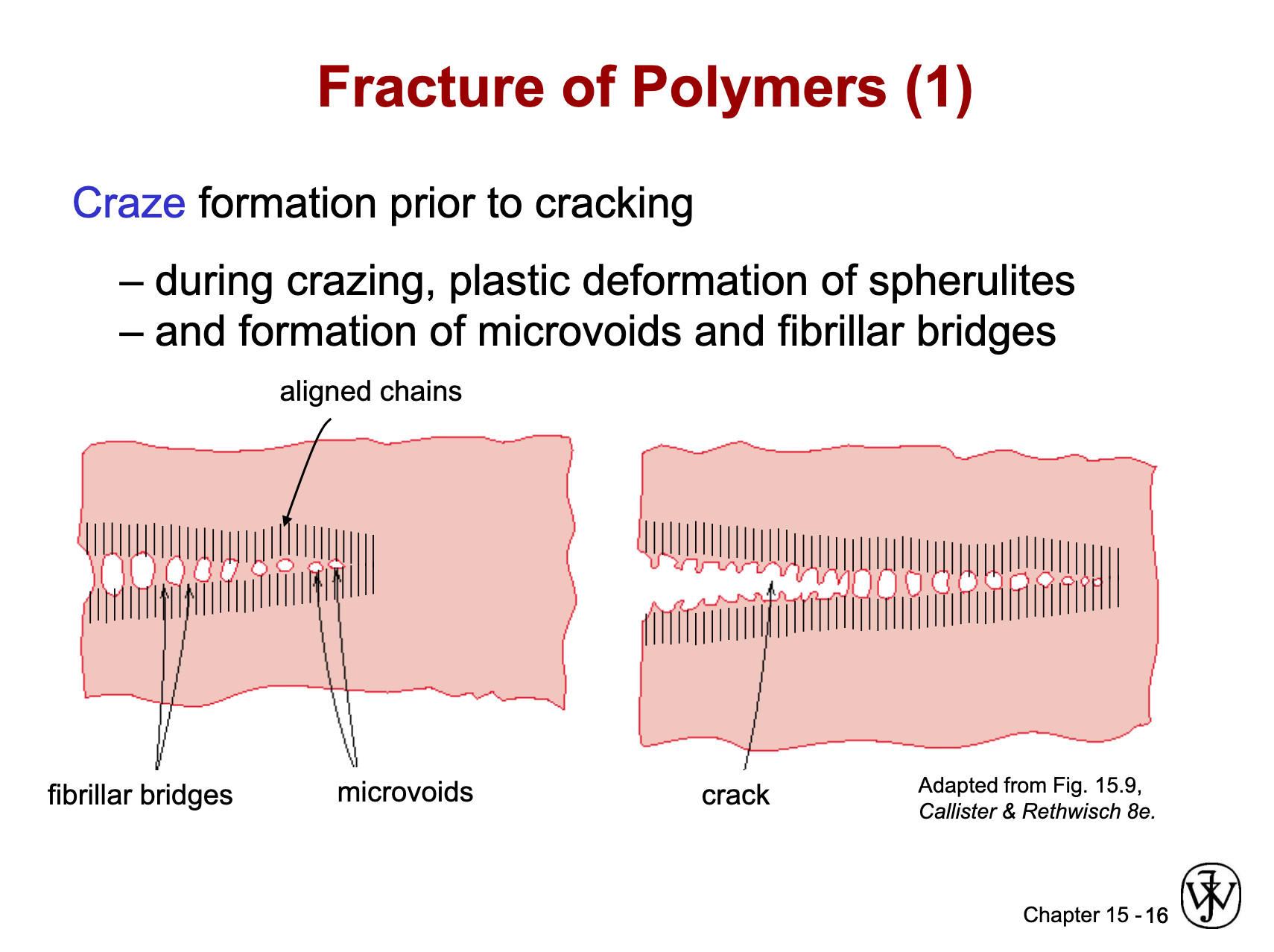
Light that once transmitted or reflected cleanly now scatters in all directions. To your eye, that diffuse scattering reads as white, regardless of the original pigment.
Put more simply: consider the whitening as the optical signature of mechanical damage.
More From Around the Web
A few things that caught our eye this week:
A software engineer trying to control his DJI Romo vacuum with a PS5 controller discovered a cloud authentication bug that exposed access to nearly 7,000 vacuums worldwide. DJI says the vulnerability has since been patched.
Flipper Devices has begun open-sourcing the Flipper One firmware, starting with the MCU repository; the hardware splits duties between a Raspberry Pi RP2350 MCU (UI and power) and a Rockchip RK3576 running Linux for high-level I/O.
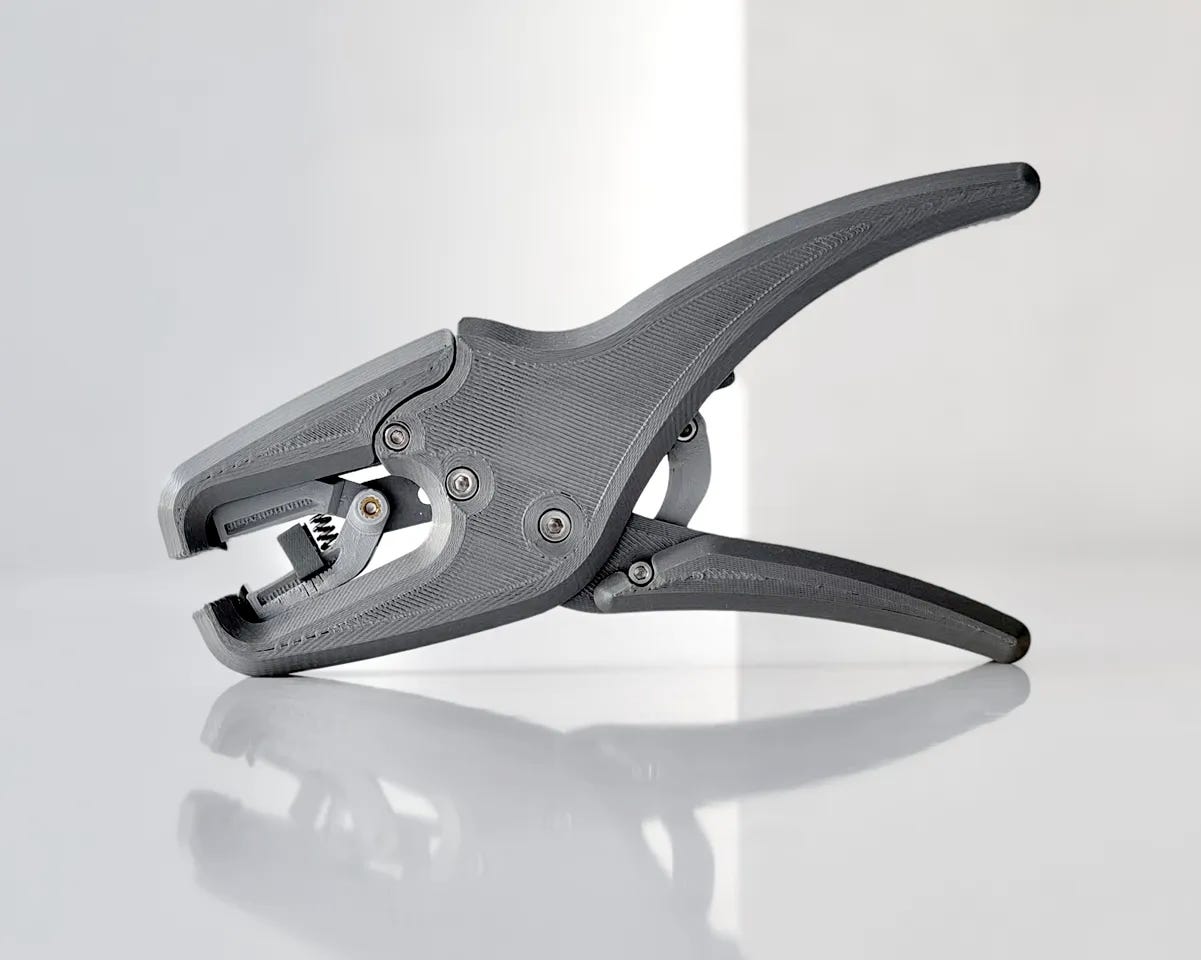
A mostly 3D-printed wire stripper, complete with STL files and a step-by-step assembly guide.
Lunches.fyi ranks corporate cafeteria menus from tech companies.
CADMap is an interactive tool mapping CAD systems, their geometry kernels, and the companies behind them. Previously mentioned in Issue #47, when it existed only as a chart.
Two upcoming events worth noting:
An online workshop on DfX (3/19) covering how to design for cost and avoid common mistakes.
SolidWorks is hosting an event on 3/17 during NVIDIA GTC Week.
A quick intermission break: our next Kinetic speaker is Blake Courter, Managing Director at Gradient Control Labs. Blake previously served as CTO at nTop and will present Geometry as Code: CAD for LLMs, exploring how code-first geometry representations could make CAD models readable and directly modifiable by language models.

Early Bird tickets for Kinetic (May 12–13, SF) are open through the end of March. If you were planning to come, now’s a good time to register before prices increase!
Interesting Interview: From Rocket Shop to Software Startup
“At Stoke, we set out to build a rocket, but even while we were still in early prototyping, off-the-shelf software tools were insufficient to meet our demands. It became clear we needed an engineering toolset that could manage design, engineering, and production of a highly complex, fast-paced project, while offering traceability, repeatability, and audit readiness. None of the tools that already existed met the needs of our complex hardware and fast-paced environment—so we built it ourselves.”
This week’s exclusive interview features Brent Bradbury, Head of Business at Boltline, about how a rocket program ended up spawning a software company. Not an unusual story - many widely used tools (Slack included) started as internal systems built to solve problems inside fast-moving teams that later became standalone companies.
It’s historically more common in software, but as hardware startups scale and build more internal tooling, the same pattern is emerging. Similar in theme: the SpaceX mafia and other associated startups.
Read the full interview here.
CoLab: Where AI + Engineers Make Better Decisions
There’s always 👉that guy👈 in the design review meeting. But what if “that guy” could give feedback async instead? When you run virtual design reviews with CoLab, you codify expert knowledge automatically as you go. Then, AI agents can understand how your team makes decisions. Now, the agents can annotate files and surface insights that help you converge on the best design faster. See how it works here.

Manufacturing & Startup News
More leftovers from our weekly research:
Taya raised $5M in seed funding to build a pendant-style wearable for voice notes that records and transcribes only the user’s voice.
Instrumental raised new funding from NVentures and Root Ventures as it expands its manufacturing AI platform into server and rack production for data centers.
The U.S. Department of Transportation announced a pilot program allowing eVTOL and other ultralight aircraft to begin operating in select regions this summer, prior to completing full FAA certification.
Isembard, a European manufacturing startup, raised $50M in Series A funding and plans to open 25 factories by 2026 focused on precision components for aerospace and defense.
Golioth, a platform for managing and connecting microcontroller-based IoT devices, was acquired by Canonical, the company behind Ubuntu.
Tools From Our Partners
Jiga – Custom parts at digital speed, with trusted shop access.
SolidWorks for Startups – Full access to SolidWorks’ product development tools, free for early-stage startups.
DraftAid – AI that automatically generates manufacturing-ready 2D drawings from 3D CAD.
Solderable – Custom PCB design for serious hardware teams.
Access Every Link We’ve Ever Shared 🎞️
Refer three friends to Hardware FYI and unlock our full archive.
Missed an issue? Hunting for that one link? Every tool, guide, and article we’ve ever shared is in here.
P.S. If you find something interesting—an article, tool, funding round, project, really anything—send it our way!
P.P.S. 20,000+ engineers, founders, and operators read this newsletter. If you want to reach them, get in touch.
Wondering if loss of color in a plastic bucket is a similar chemical transformation (turned white)🤠