
Why Hardware Development Frameworks All Rhyme
Claude Code for test fixtures, hardware development frameworks, Kia's humanoid robot factory plans, and more.


Topics worth your time this issue: a deep dive into engineering development frameworks and how teams build across different industries, an updated market map of physical AI and robotics in 2026, using Claude Code to design test fixtures, Kia's humanoid robot factory plans, and more.

Interesting Lecture Notes: On Hardware Development Frameworks
Hardware development frameworks tend to look different on the surface - consumer electronics runs sequential waterfall scheduling, automotive and highly-regulated industries operate on V-Model framing with requirements traceability baked in, while new-age space startups have shifted toward ‘agile’ iterative development. At the core though, all frameworks aim to solve the same underlying problem: how do you manage integration risk in a physical system where changing something late is expensive?
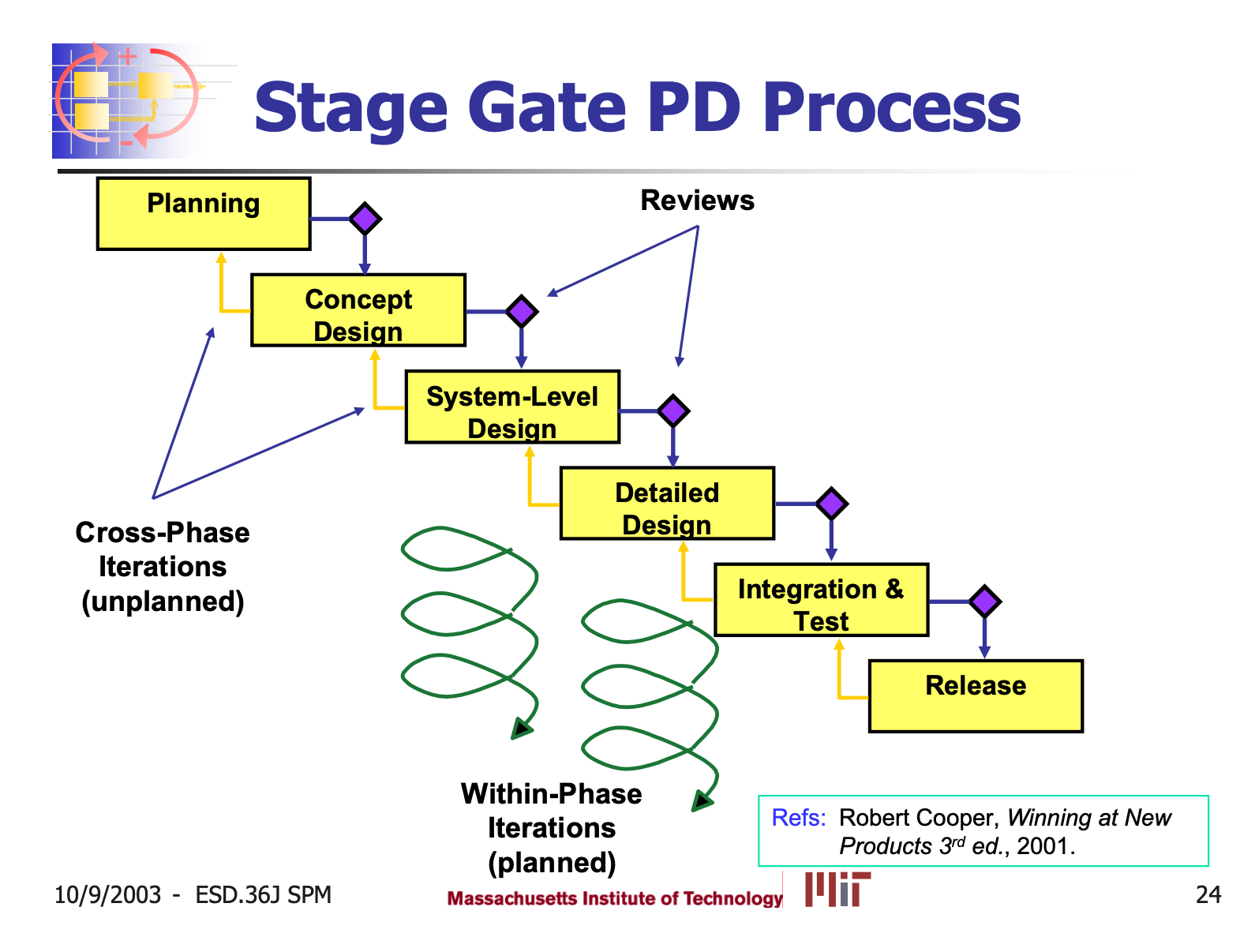
From the DSpace at MIT, a classic set of lecture notes on product development processes (lecture #11, circa 2003), but more relevant now than ever as teams building complex hardware has expanded well beyond traditional primes and OEMs.
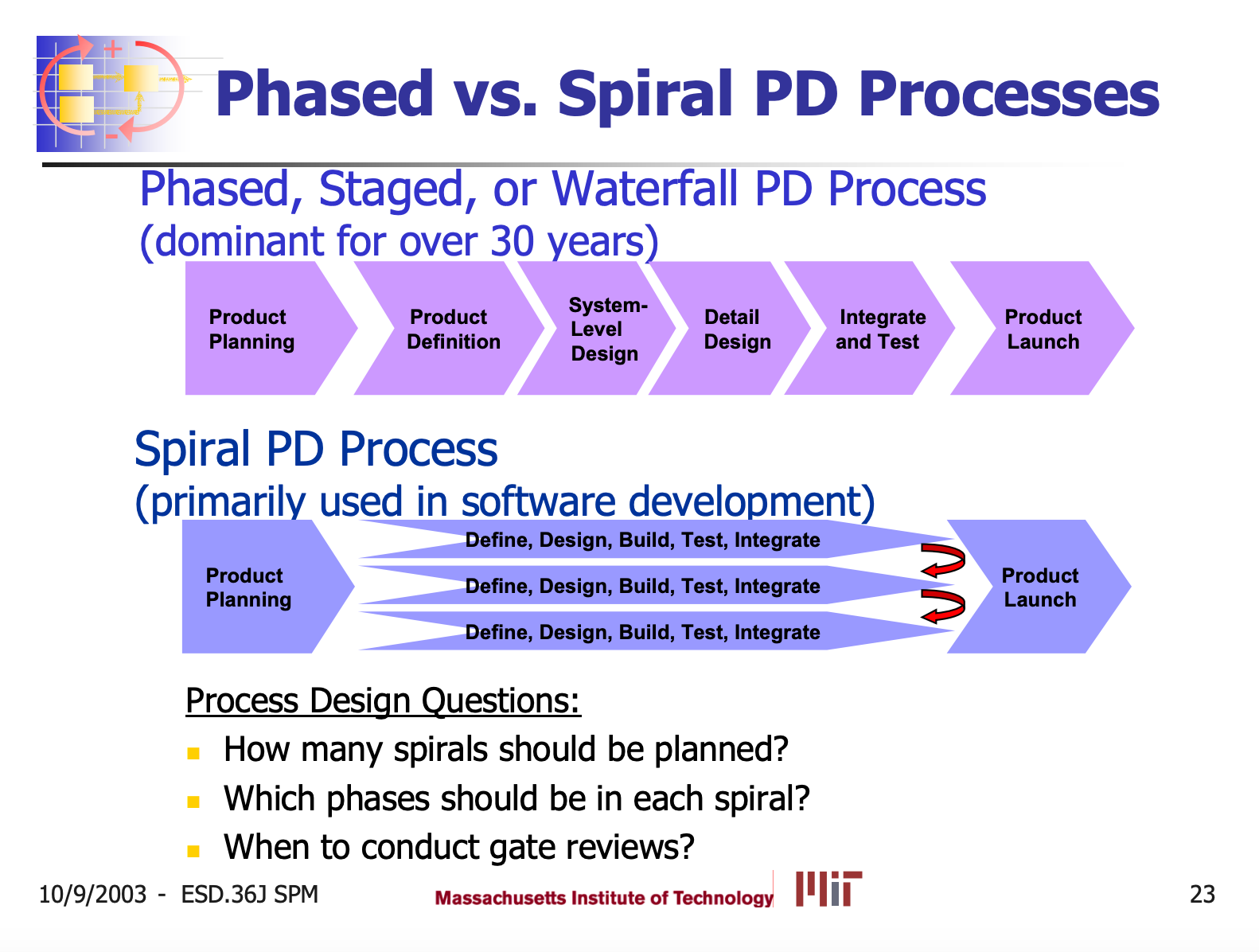
Most engineering teams don’t pick a process so much as inherit one, and what’s interesting is how much the frameworks rhyme across industries despite looking different on the surface. The same variables (build volume, system complexity, degree of vertical integration, regulatory environment) just get weighted differently depending on what’s built.
For example, SpaceX and Anduril treat hardware as learning material; rapid build-test-redesign loops where a failed unit is just the cost of data. Traditional defense primes run highly controlled V-Model flows with frozen requirements and certification-driven verification. Apple and Oura run EVT–DVT–PVT, where architecture is locked early and late changes are prohibitively expensive once tooling begins.
Worth reading as a useful reference regardless of which framework is in play. More recommended reading: the NASA Systems Engineering Handbook.
Consumer Hardware at Scale: 0 → 1 → n

Our next Kinetic panel brings together operators who’ve built consumer hardware more times than they can count, from the biggest companies in the world down to early-stage startups. Expect hard-won lessons, honest mistakes, and no shortage of opinions with:
Michael Kubba, Chief Product & Technology Officer, Fellow
Niko Reid, VP Hardware Engineering, Fortune Brand Innovations
Santhi Analytis, Venture Advisor, Designer Fund.
Join us May 12–13 in San Francisco.
Interesting Chart: Robotics & Autonomous Systems, 2026
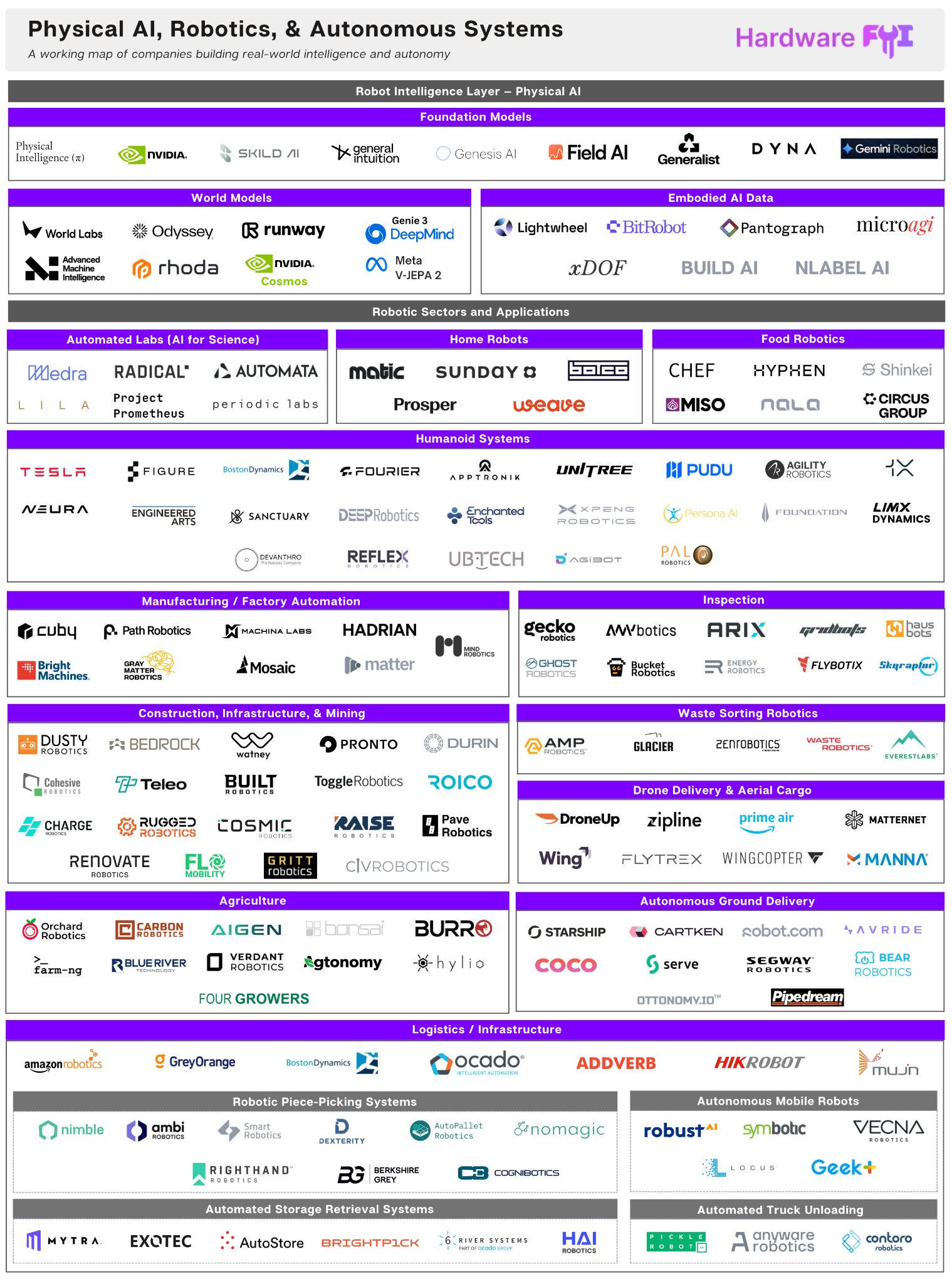
We’ve written a fair amount about robotics over the past few issues (hard not to, given how much is moving in terms of engineering development!). This is our annual map update, now rebranded as “Physical AI, Robotics, & Autonomous Systems” to reflect where the field sits in 2026.
The main addition is the intelligence layer, which didn’t really exist as a discrete category a couple years ago.
Presented by Protolabs: Design for Moldability Toolkit
Designing plastic parts for injection molding means balancing cost, quality, and manufacturability, and small geometry decisions can drive big changes in lead time and tooling complexity. Protolabs’ Design for Moldability Toolkit is a practical resource for engineers working through common molding challenges like draft, wall thickness, undercuts, gating, and shut-offs. Protolabs also provides automated design analysis on CAD models to highlight features that can be adjusted before cutting a tool. Use it to reduce quoting advisories and accelerate production readiness. Accelerate your design today.

More From Around the Web
Things worth reading that didn’t fit anywhere else this week:
Using Claude Code as a test fixture/jig-making tool. Feed it sketches, and get a file ready to 3D print via FreeCAD.
A neat real-world demo of PID control on a differential drive robot. Also: turns out Instagram Reels might be one of the better formats for visualizing fundamental control theory.
A full die casting cycle, from start to finish.
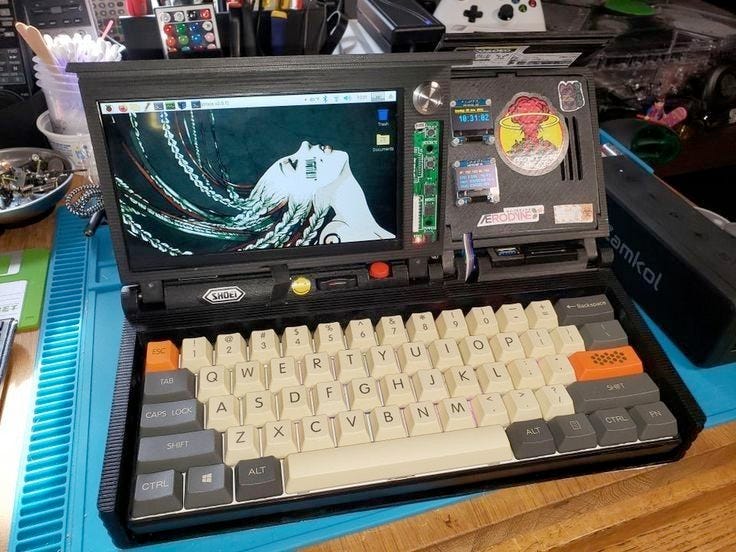
The cyberdeck aesthetic: a whole subcommunity building gorgeous, chunky shells around old laptops or a Raspberry Pi.
Manufacturing & Startup News
More leftovers from our weekly research:
Kia plans to deploy Boston Dynamics’ humanoid robots in its US factories by 2029 and release its first ‘software-defined’ vehicle (i.e. features can be remotely updated like a smartphone) by 2027, as part of a broader technology and electrification push.
Askari Defense raised a $1.7M pre-seed round to build low-cost drone-intercepting systems from investors including Knoll Ventures, Overline, and Georgia Tech Foundation.
Sonibel raised $1.6M in pre-seed funding to develop an acoustic sensor that mounts to a welding torch and uses ML to catch defects (including those inaudible to the human ear) for better weld quality control.
Terawatt Infrastructure is raising up to $1.5B in equity and debt to build a national network of charging depots for autonomous EV fleets like Waymo, pivoting from its earlier focus on electric truck charging.
Merino Energy launched an all-in-one heat pump that installs in one hour for $3,800 total, with a SEER2 rating of 15.2; above the federal minimum of 14.3 but below standard mini-splits (18-25; higher = lower electricity bill). The core bet is that simpler design enables flat-rate pricing and removes the costly quote process that was itself a bottleneck to heat pump adoption.
Tools From Our Partners
Jiga – Custom parts at digital speed, with trusted shop access.
SolidWorks for Startups – Full access to SolidWorks’ product development tools, free for early-stage startups.
DraftAid – AI that automatically generates manufacturing-ready 2D drawings from 3D CAD.
Zoo – AI-native CAD for generating fully editable B-rep models from natural language or direct manipulation.
Access Every Link We’ve Ever Shared 🎞️
Refer three friends to Hardware FYI and unlock our full archive.
Missed an issue? Hunting for that one link? Every tool, guide, and article we’ve ever shared is in here.
P.S. If you find something interesting—an article, tool, funding round, project, really anything—send it our way!
P.P.S. 20,000+ engineers, founders, and operators read this newsletter. If you want to reach them, get in touch.