
Why is Manufacturing Difficult?
Complexities buried in manufacturing, recipe diagrams for engineers, stamping press choreography, and more.


Topics worth your time: what consumer hardware can teach the next generation of robotics startups about manufacturing, an insider’s look at progressive-die stamping, engineering recipe diagrams, and more.
P.S. We’re back in SF for another happy hour on 8/11! We’re setting aside a few tables for teams with demos or other work they’d like to bring into the room. If that’s you, send us an email.

Interesting Presentation: Why is Manufacturing Difficult?
More and more kinds of work can now be remade at almost no cost. Not to say that the work is good or particularly useful, only that it has become cheap to produce. The contemporary word for this is ‘slop’, describing the kind of cheap excess that appears when the barrier to entry is near zero. It’s particularly top of mind as more artificial content has overwhelmed social feeds, to the point that LinkedIn now has a ‘Seems Like AI Slop’ button.
Perhaps what’s still beautiful about working with real systems (especially those that extend beyond demos or prototypes) is that the process of building is still just as difficult. And by virtue of the work itself, there’s a natural barrier to ‘slop’.
Dr. Anna Thornton’s 2016 MIT presentation on Why is Manufacturing Difficult? is a great synthesis on the complexities of manufacturing that boils down to this: manufacturing is complex because it is an exactingly detailed process fraught with decisions that cast a long shadow once set.
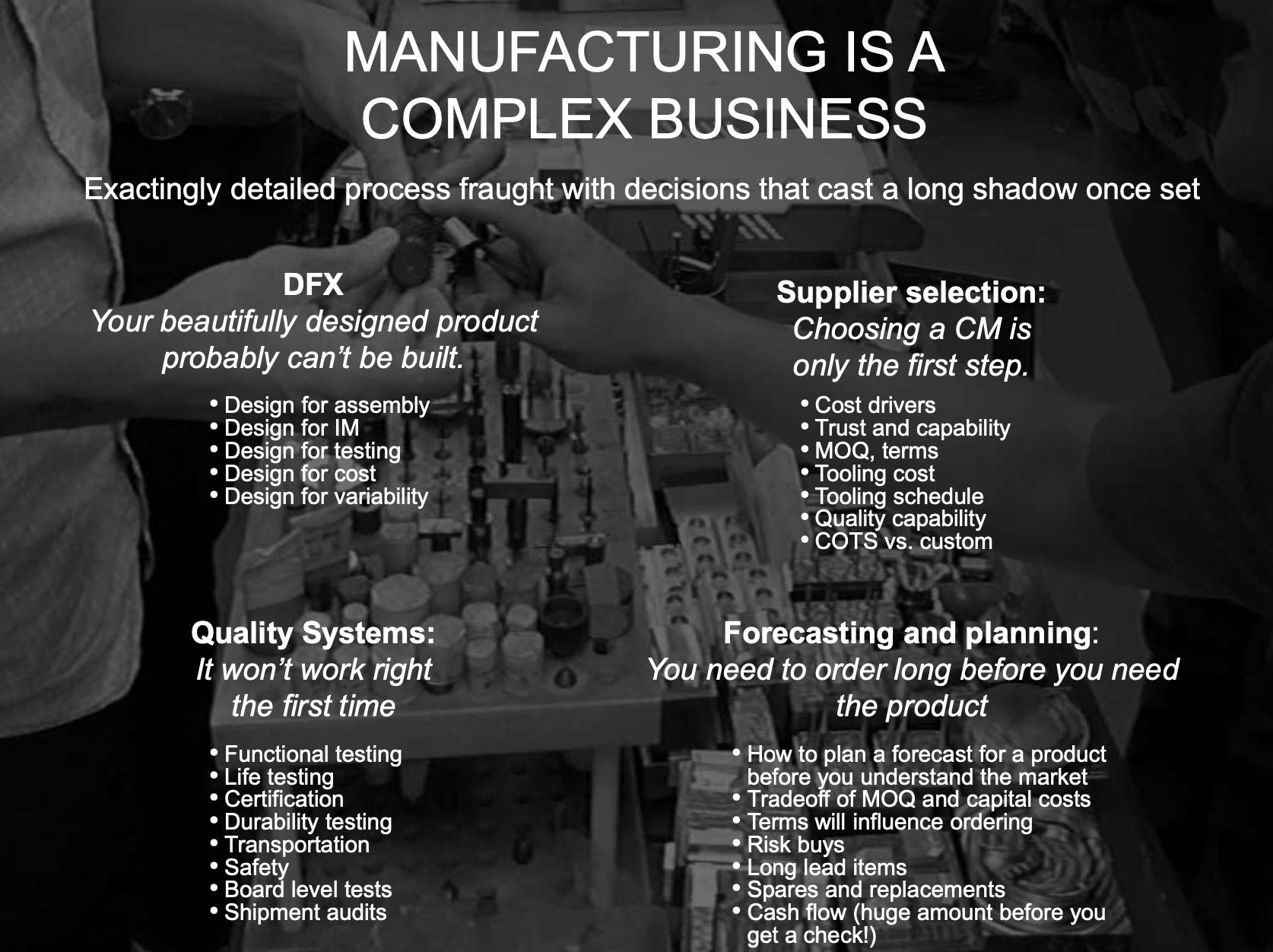
The story of product development is usually told from the engineer’s POV, but manufacturing has its own lifecycle that the author groups into three phases: pre-manufacturing, manufacturing ramp, and ongoing production. Multiple parallel loops and qualification steps that run concurrently to the regular development lifecycle, where the object of the work is to translate a design into a repeatable process.
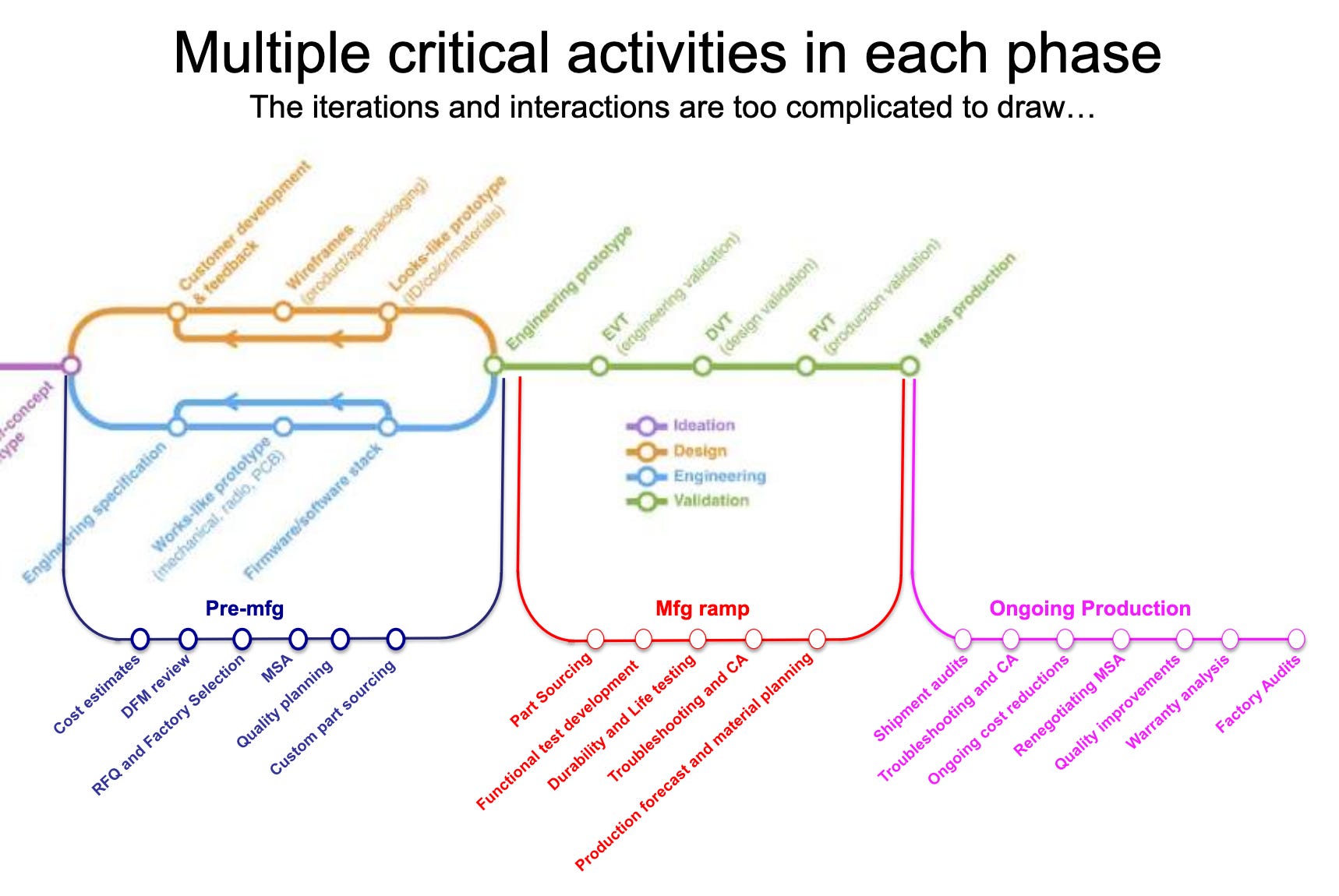
There’s lots more nuggets of knowledge buried in the presentation; see pages 20–21 for standard critical path/production timelines, and pages 24–27 for cost and supply-chain planning.
Though most of the framing is on consumer hardware, many robotics startups would benefit from the methodology it lays out for factory qualification, sourcing, and production planning. The supply chain, after all, doesn’t care whether the finished product walks or makes toast.
More From Around The Web
CADBench is a benchmark for evaluating models and agents on AI-generated parametric CAD.
Math for the Electronics Student by RadioShack.
A hand-designed, cam-operated torsion spring machine - more machining ASMR.
Overseas machine shops have found short-form social. Perhaps it does work as a discovery channel if we’re writing about it.
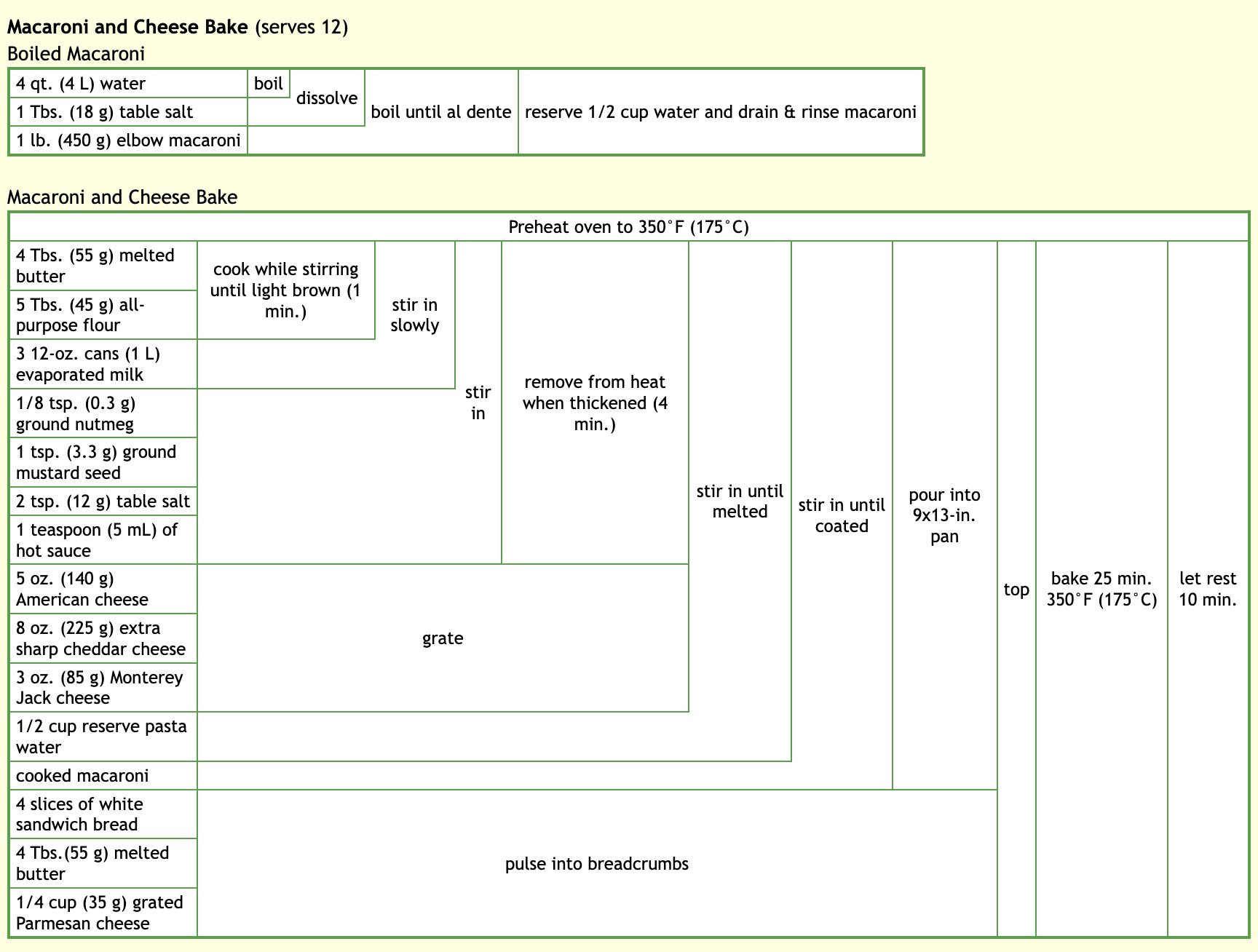
Recipes presented as diagrams by cookingforengineers.com. See here for a tiramisu recipe.
Sponsored: Zoo is hosting a virtual API Makeathon open through 8/5 - prizes include a Bambu Lab 3D printer and API credits. Register here!
Presented by Jiga: Manufacturing ≠ Transactions
Source custom parts with direct access to the manufacturers making them. No middleman, no black box. Jiga gives you a vetted network and one accountable partner standing behind every order. You know who's building your parts and communicate with them directly. AI-assisted operations handle supplier matching, quoting, quality verification, and production tracking, so the relationships stay human while the operations run at speed.

Interesting Video: Progressive Die Stamping
A visual walkthrough of sheet metal stamping, including progressive die stamping and all the fixturing/workstations that keep the line moving.
Manufacturing & Startup News
DoorDash Labs received FAA Part 135 air-carrier certification, making it the eighth U.S. operator cleared to run commercial drone deliveries. The company had previously (and still is) partnered with Wing and Flytrex, ahead of a fall 2026 launch for DoorDash Air.
SoftBank is reportedly in talks to acquire Gravis Robotics, an ETH Zurich spinout that builds autonomy kits for excavators.
REEF Technologies acquired KAIKAKU, a food robotics startup developing back-of-house food assembly automation.
Terminal raised a $20M Series A to normalize telemetry data through a single API for fleet operators and insurance companies.
Tools From Our Partners
Aris Machina Protos – Design & validate anything, with the AI-native workspace for industrial science and hardware R&D.
Jiga – Custom parts at digital speed, with trusted shop access.
SolidWorks for Startups – Full access to SolidWorks’ product development tools, free for early-stage startups.
Zoo – AI-native CAD with a modern geometry engine, readable code, and editable feature trees for precise, editable models.
Access Every Link We’ve Ever Shared 🎞️
Refer three friends to Hardware FYI and unlock our full archive.
Missed an issue? Hunting for that one link? Every tool, guide, and article we’ve ever shared is in here.
P.S. If you find something interesting—an article, tool, funding round, project, really anything—send it our way!
P.P.S. 20,000+ engineers, founders, and operators read this newsletter. If you want to reach them, get in touch.