
More Process Won’t Fix Systems Engineering
Weekend Wire #58


👋 Happy Saturday! This week’s edition covers a paper on the critique of modern systems engineering from a former NASA Administrator, a breakdown of the backend realities of PCB and e-waste recycling, and a look at how an OEM runs a semi-automated production line out of a 600 sq ft shop.

Interesting Paper: How Do We Fix Systems Engineering?
Spend enough time around complex hardware programs or large engineering organizations and a pattern often emerges: the process matures, but the systems don’t necessarily get better. Failure rates often look similar to what they were before formal process frameworks were introduced.
In How Do We Fix System Engineering?, former NASA Administrator Michael Griffin argues that the solution to engineering failures is not the addition of more process, but a specific pursuit of “design elegance”. He makes the case that strict adherence to process is like financial accounting: it can track a plan, but it cannot differentiate between a good plan and a bad one. Instead, true systems engineering should be defined by the pursuit of four attributes:
Workability: Does the design actually work? It must produce the intended behavior across the full range of expected input conditions.
Robustness: Is the system robust to failure? Small changes in inputs or environment do not cause radical departures in output, and the system degrades gracefully rather than failing abruptly.
Efficiency: Does it produce the desired result for a lesser expenditure of resources than competing alternatives?
Minimization of unintended consequences: Does it minimize side effects, wasted energy, and negative externalities? Poor designs are distinguished by the actions required to compensate for their unwanted features.
Griffin’s point is that without some shared notion of elegance, process becomes bookkeeping. Real systems thinking prioritizes context and a theory of elegance over more documentation. Coming from the former head of NASA, it’s worth noting who’s making the critique. More on the formal study of systems engineering in Issue #48.
A quick intermission break: we’re excited to announce our next Kinetic speaker, Keenan Wyrobek, Co-Founder & CTO of Zipline! For those unaware, he’s also the co-creator of ROS and currently oversees the engineering behind one of the world’s largest autonomous drone fleets.

Early Bird tickets for Kinetic (May 12–13, SF) are open again for a second batch. If you were planning to come, now’s a good time to register before prices increase!
Interesting Chart: The Backend of E-Waste Recycling
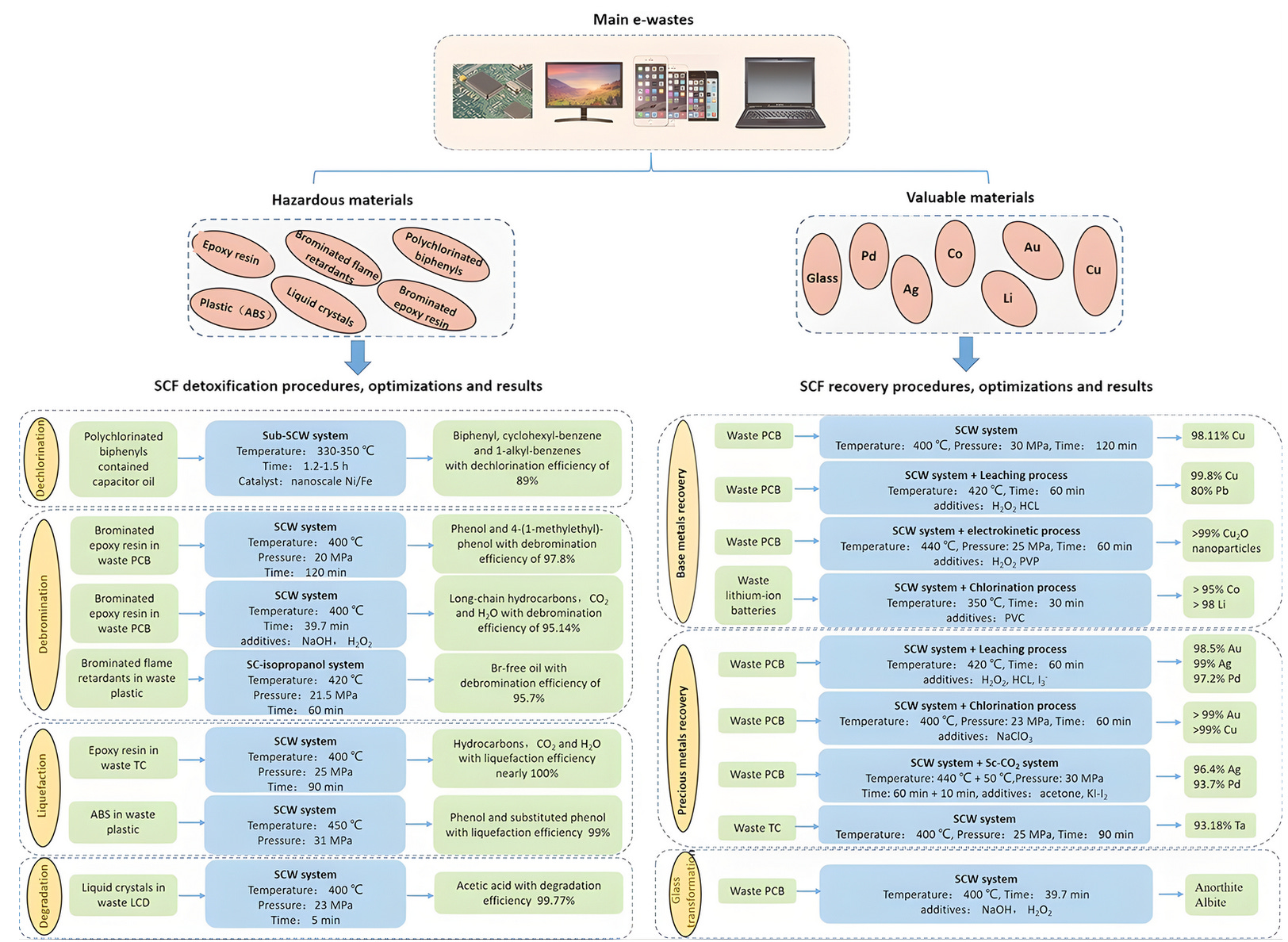
Pulled from the archives: a breakdown of every effective method for disassembling a PCB and then recovering raw materials from the components and the board. For context, ~62 million metric tons of e-waste were generated globally in 2022; despite an estimated $60–90B in material value embedded in that waste stream, only about 22% is formally collected and recycled.
One of the most important aspects of PCB recycling is whether components are able to be sorted or if bulk crushing methods have to be used.
DRCY: AllSpice’s AI Design Review Agent
Meet DRCY, AllSpice’s AI-powered agent built specifically for hardware design reviews. DRCY runs first-pass checks on schematics and datasheets to surface critical errors early, such as config errors, voltage mismatches, and much more. Hardware teams can spend less time on rechecks, more time innovating, and ship with confidence.
Give DRCY a try here.
Interesting Video: Backyard Factory Automation
In an oddly compelling blend of infomercial energy and IRL Factorio automation, this walkthrough follows a backyard OEM running a semi-automated line for boat and outdoor furniture care products — capable of ~$830K/month in product output at max capacity.
It’s a compact, in-house production line with rotary bottle labeling, inline filling, an air-fed cap delivery system, and conveyor timing controlled via Arduino. If anything, the main takeaway is that starting anywhere has compounding effects; case in point: a small business running real automated lines.
Manufacturing & Startup News
More leftovers from our weekly research:
The former chief research officer at OpenAI, Bob McGrew, is co-founding a new startup called Arda to build AI software for manufacturing; details are light beyond a team that includes former Adept and Palantir engineers.
On the funding landscape for solid-state transformers used in electrical grids:
DG Matrix raised $60M in Series A funding to develop solid-state transformer systems for data centers.
Amperesand raised $80M in Series A funding to commercialize its medium-voltage solid-state transformer platform for AI data centers, with 30MW of systems slated for delivery in 2026.
MatX, an AI chip startup founded by former Google TPU engineers, raised $500M in Series B funding to manufacture its processors with TSMC, with plans to begin shipping in 2027.
NODA AI raised $25M in Series A funding to develop software for multi-domain autonomous systems, positioning itself as an orchestration layer that coordinates drones, USVs, AUVs, and satellites.
Tools From Our Partners
Jiga – Custom parts at digital speed, with trusted shop access.
SolidWorks for Startups – Full access to SolidWorks’ product development tools, free for early-stage startups.
DraftAid – AI that automatically generates manufacturing-ready 2D drawings from 3D CAD.
Zenode – Free AI-powered search engine for electronic components. A smarter, faster alternative to part catalogs like Digi-Key.
Access Every Link We’ve Ever Shared 🎞️
Refer three friends to Hardware FYI and unlock our full archive.
Missed an issue? Hunting for that one link? Every tool, guide, and article we’ve ever shared is in here.
P.S. If you find something interesting—an article, tool, funding round, project, really anything—send it our way!
P.P.S. 20,000+ engineers, founders, and operators read this newsletter. If you want to reach them, get in touch.